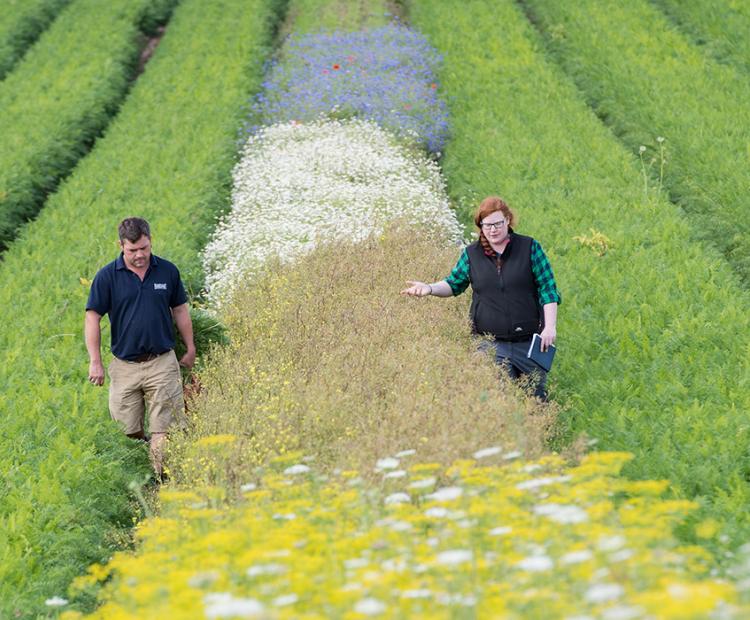
The big picture: using wildflower strips for pest control
They may be beautiful, but these strips prove pretty deadly for every farmer's mortal enemy: aphids
A gene-edited barley developed by scientists at Rothamsted Research has become the first crop to receive a Precision Bred Organism (PBO) marketing notice confirmation through the UK’s new regulatory pathway for precision breeding.
The marketing notice confirms that the barley meets the criteria of a precision-bred organism under the Genetic Technology (Precision Breeding) Act 2023 and the Genetic Technology (Precision Breeding) Regulations 2025, allowing the crop to progress towards wider evaluation (research and analysis) and eventual commercial deployment of the trait.
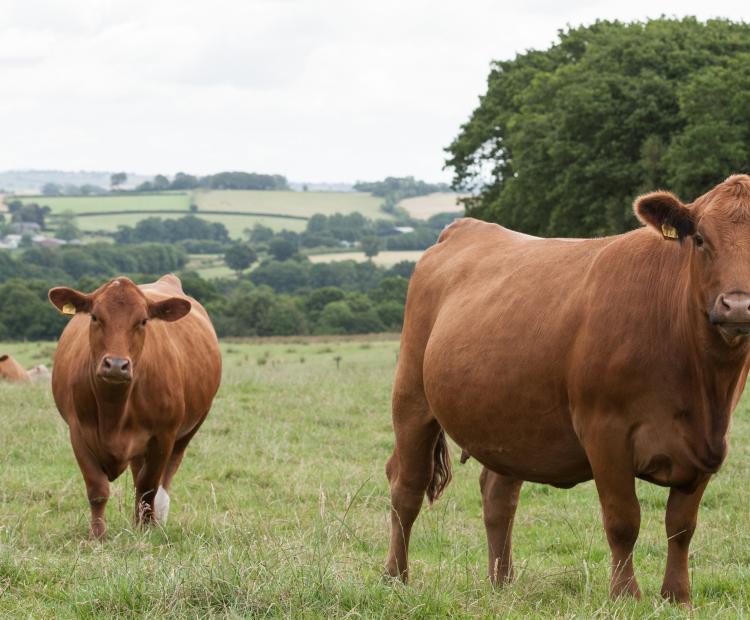
The barley has been developed using CRISPR gene editing to increase lipid content in plant tissues, creating a high-energy forage crop for ruminant livestock such as cattle and sheep. Increasing lipid levels in forage can improve feed efficiency and has the potential to reduce methane emissions produced during digestion. The genetic changes introduced into the barley are small edits that could also occur naturally or through conventional breeding, which was also approved following a scientific review by the Advisory Committee on Releases to the Environment.
The Rothamsted barley was developed by introducing small edits into genes that normally break down plant oils. By reducing this breakdown process, the plants accumulate higher levels of lipids in their vegetative tissues.The result is a forage crop with increased metabolisable energy that could help livestock gain more energy from the same feed intake. Peter Eastmond, who led the research at Rothamsted, said:
“This barley has been designed to increase the energy density of forage by boosting lipid levels in the plant. Higher-energy feed can improve livestock productivity and offers a promising route to reducing methane emissions from ruminant agriculture. Receiving the first precision-bred marketing notice for a crop in the UK is a major milestone and reflects many years of research into plant lipid metabolism and gene editing at Rothamsted.”
The PBO confirmation represents an important step under the UK’s new regulatory framework for precision breeding, which allows plants with targeted genetic changes that could arise naturally to be developed and assessed more efficiently. Freddie Theodoulou, Green Engineering Strategic Programme leader at Rothamsted Research, said:
“This decision demonstrates how the UK’s precision breeding framework can enable responsible innovation in crop science. It allows researchers to translate discoveries into crops with real-world benefits while maintaining rigorous scientific oversight. Traits like this high-lipid barley illustrate the potential of precision breeding to support more sustainable agriculture – in this case by improving the nutritional quality of forage and helping reduce greenhouse gas emissions from livestock.”
The barley is being evaluated through the PROBITY (Platform to Rate Organisms Bred for Improved Trait and Yield) initiative, a collaboration between researchers, farmers, and supply chain partners designed to test precision-bred crops in real farming environments.The project is led by the British On-Farm Innovation Network and funded by Defra's Farming Innovation programme, which is delivered by Innovate UK.
Alongside the high-lipid barley, the project is also assessing precision-bred wheat varieties with traits aimed at improving grain quality and yield, led by Rothamsted Research and John Innes Centre, respectively.
By working directly with farmers and industry partners, the initiative aims to build evidence about the performance, benefits and practical applications of precision-bred crops across the UK food system.

Biochemist

Science Team Leader
Rothamsted Research is the longest-running agricultural research institute in the world. We work from gene to field with a proud history of ground-breaking
discoveries in areas as diverse as crop management, statistical interpretation and soil health. Our founders, in 1843, were the pioneers of modern
agriculture, and we are known for our imaginative science and our collaborative approach to developing innovative farm practice.
Through independent research, we make significant contributions to improving agri-food systems in the UK and internationally, with
economic impact estimated to exceed £3 bn in annual contribution to the UK economy. Our strength lies in our systems approach, which combines strategic research,
interdisciplinary teams and multiple partnerships.
Rothamsted is home to three unique National Bioscience Research Infrastructures which are open to researchers from all over the world:
The Long-Term Experiments,
Rothamsted Insect Survey and the
North Wyke Farm Platform.
We are strategically funded by the Biotechnology and Biological Sciences Research Council (BBSRC), with additional support from other national and
international funding streams, and from industry. We are also supported by the Lawes Agricultural Trust (LAT).
The Biotechnology and Biological Sciences Research Council is part of UK Research and Innovation, a non-departmental public body funded by a grant-in-aid
from the UK government.
BBSRC invests to push back the frontiers of biology and deliver a healthy, prosperous and sustainable future. Through our investments, we build and support a vibrant,
dynamic and inclusive community which delivers ground-breaking discoveries and develops bio-based solutions that contribute to tackling global challenges,
such as sustainable food production, climate change, and healthy ageing.
As part of UK Research and Innovation (UKRI), we not only play a pivotal role in fostering connections that enable the UK’s world-class research and innovation system
to flourish – we also have a responsibility to enable the creation of a research culture that is diverse, resilient, and engaged.
BBSRC proudly forges interdisciplinary collaborations where excellent bioscience has a fundamental role. We pioneer approaches that enhance the equality, diversity,
and inclusion of talent by investing in people, infrastructure, technologies, and partnerships on a global scale.
The Lawes Agricultural Trust, established in 1889 by Sir John Bennet Lawes, supports Rothamsted Research’s national and international agricultural science through the provision of land, facilities and funding. LAT, a charitable trust, owns the estates at Harpenden and Broom's Barn, including many of the buildings used by Rothamsted Research. LAT provides an annual research grant to the Director, accommodation for nearly 200 people, and support for fellowships for young scientists from developing countries. LAT also makes capital grants to help modernise facilities at Rothamsted, or invests in new buildings.