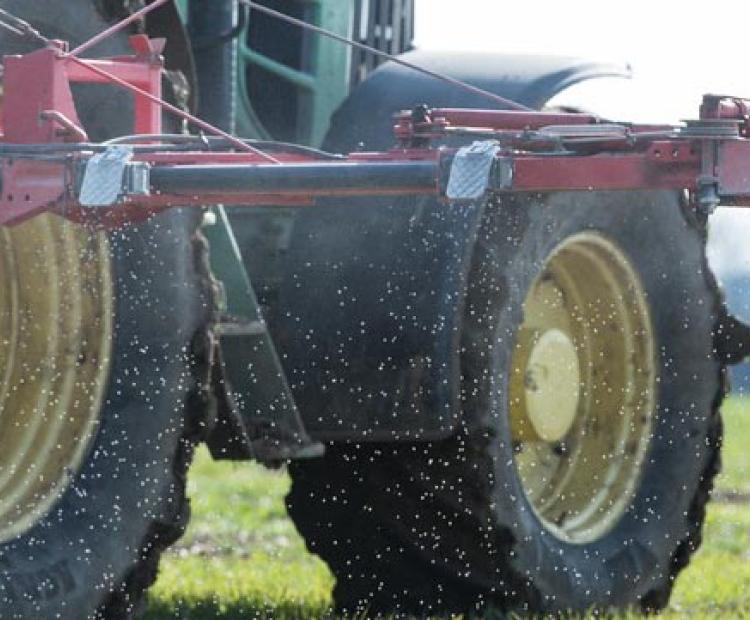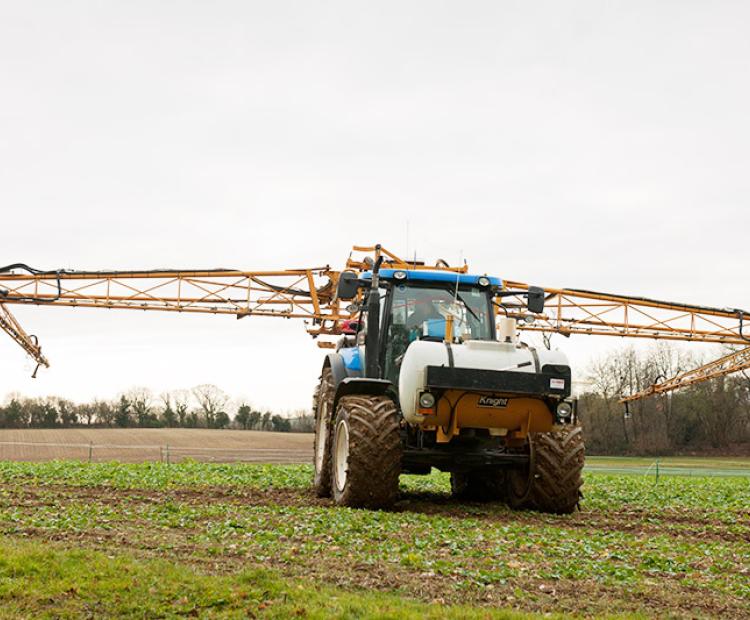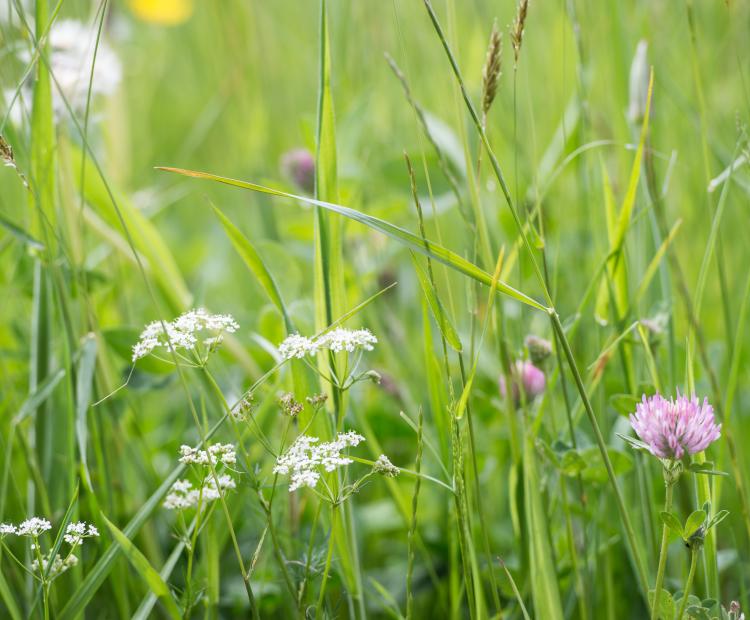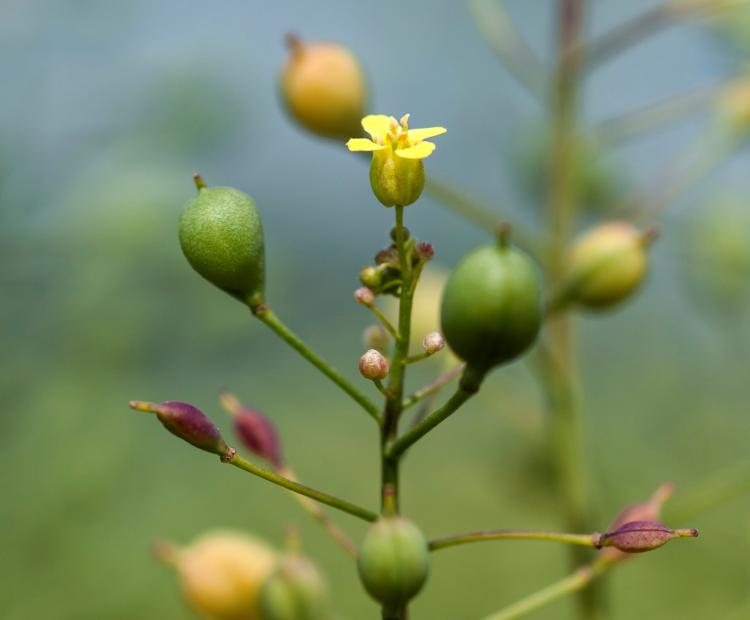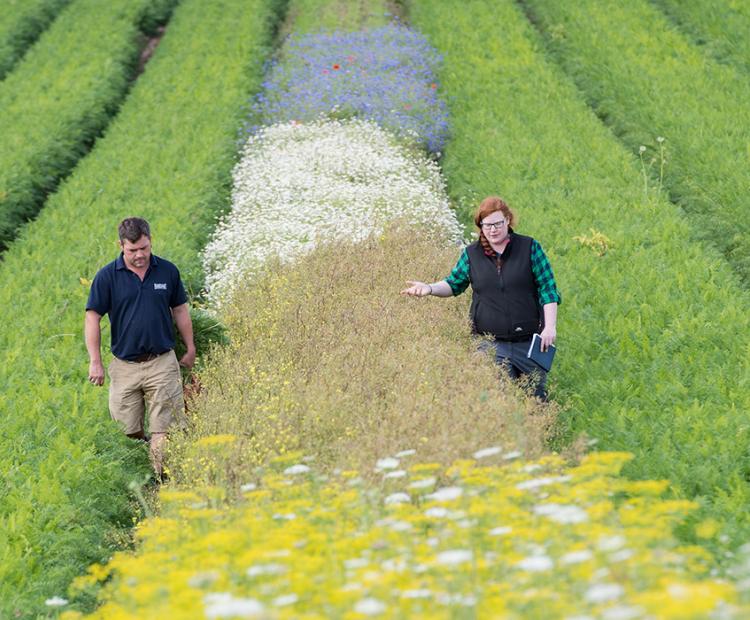
The big picture: using wildflower strips for pest control
They may be beautiful, but these strips prove pretty deadly for every farmer's mortal enemy: aphids

We will continue to deliver inventory estimates according to the 2019 Refinement to the 2006 IPCC Guidelines for National Inventories. Each submission will be reported in year “N+2” via national GHG statistics (DESNZ, February N+2), UNFCCC submission (CRF and NIR, April N+2) and CLRTAP submission (Defra, March N+2). We will compile data (and where necessary re-calculate historic data) for every submission from 1990 to the latest year, e.g. for the 2024 submission we will compile and report data for 1990-2022. This will be derived from 10 km x 10 km grid square estimates, aggregated to DA and UK level estimates per source category and pollutant. Geographical scope excludes Crown Dependencies (CDs) and Overseas Territories (OTs). Our team is well-sighted on the changes to future reporting requirements as the UK moves from reporting under UNFCCC/Kyoto Protocol to submissions under the ETF from 2024. While the precise reporting details are still to be determined, we anticipate minor changes and will work with Defra, DESNZ and the NAEI agency to ensure seamless delivery. Given our detailed understanding of the agriculture inventory and awareness of the ongoing DESNZ-led improvement to the NAEI digital structures, we are confident that we can maintain high quality, timely delivery of the UK and sub-UK reports.
The project is comprised of the following work packages:
Work Package 1: Operational Delivery of the Inventory (LC, RRes):
WP1a Reporting as per statutory requirements via DESNZ and Defra through six tasks:
Task 1a.1 GHG Emissions Estimates. 1a.1.1 Compilation of agricultural GHG emissions estimates (year-2) (SG, RRes)
we will deliver inventory estimates according to the 2019 Refinement to the 2006 IPCC Guidelines for National inventories, meeting data quality objectives within the limitations of the data, time and resources available, communicating with the data providers and establishing data supply agreements that address security and GDPR. The data processing will comprise: 1.Annual extension of the harmonised time series of activity data; 2.Derivation of Robust Farm Type allocation; 3.Derivation of Activity data tables; 4.Emissions calculations ; 5.Compilation of all outputs and checks; 6.Data submission on the Common Reporting Format; 7.Preparation of high-resolution emission maps.
Task 1a.2 Air Quality Pollutant Emissions Estimates (AC, RRes). We will compile Agricultural AQP emissions estimates for each year from 1990 to y-2 for NH3, NOx, PM2.5, PM10, TSP, NMVOC. We will contribute to the Informative Inventory Report each year from 1990 to y-2.
Task 1a.3 Cross-Cutting Deliverables - Participation in international and bilateral reviews (Ricardo lead). We will engage in the annual UNFCCC and CLRTAP / NECR review processes for the GHG and AQP submissions. Our QA manager will lead our engagement and be the primary point of contact for Defra and DESNZ.
Task 1a.4 Uncertainty analysis (AM, RRes). The uncertainties will be computed by sector at UK scale and split by DA. We will use Monte Carlo simulation (“Approach 2” in the IPCC guidelines (IPCC, 2006 and Milne et al., 2015)) whereby uncertainties are characterised by appropriate distributions, pseudo-random samples of model inputs are generated according to these distributions and combined to generate a distribution of outputs which describe the uncertainty. In accord with the current inventory timeframes, we will complete the uncertainty analysis every 4 years, or when a significant change has occurred (whichever is most frequent). In other years estimates are based on the most recent set of analyses.
Task 1a.5: Provision of spatially disaggregated and point source data for GHGs and AQPs (UD, UKCEH lead). High resolution 1 km x 1 km gridded emission maps for GHGs and AQ pollutants will be produced, based on holding level activity data (JAS and CTS) using the AENEID model (UKCEH).
Task 1a.6: Additional Ad Hoc Analysis and Policy Support (LC, RRes). We shall perform additional ad-hoc analysis in response to requests from statutory bodies.
WP 1b: Reporting at sector level (KA, Ricardo)We will provide emissions per source for stakeholder use, including: Crops and Horticulture (ADAS), Dairy (RRes), Beef and Sheep (Cranfield, RRes, ADAS), Pigs and Poultry (RRes), Implied emission intensity (sector territorial emissions/sector production), GHG emissions by pathway and gas, AQP emissions by pathway and gas, Nitrogen (N) loadings to water.
Work Package 2: Agricultural GHG and AQP emissions projections, including policy scenario analysis (SG, RRes).
We will produce annual projections of future emissions of GHGs and AQPs. Projections will be compiled at UK and DA level and will, where possible, account for the projected impacts of any firm and funded policies
Work Package 3: Quality Assurance Processes for Work Packages 1 and 2 (GT, Ricardo). The inventory will meet the long-standing international standards as set out in the IPCC, EMEP-EEA and UN.
Work Package 4: Data management strategy (DS, ADAS).
Work Package 5: Public Facing Tools for Emissions Calculations (costed optional WP) (HG, ADAS).
Work Package 6: Experimental provision of Regional Soil Surface Nitrogen Balance (costed optional WP) (UD, UKCEH).

Atmospheric Chemist

Agricultural Scientist

DATA ANALYSIS TECHNICIAN

Spatial Statistician

AGRI-ENVIRONMENT MODELLER
ADAS, CEH, Cranfield, Ricardo