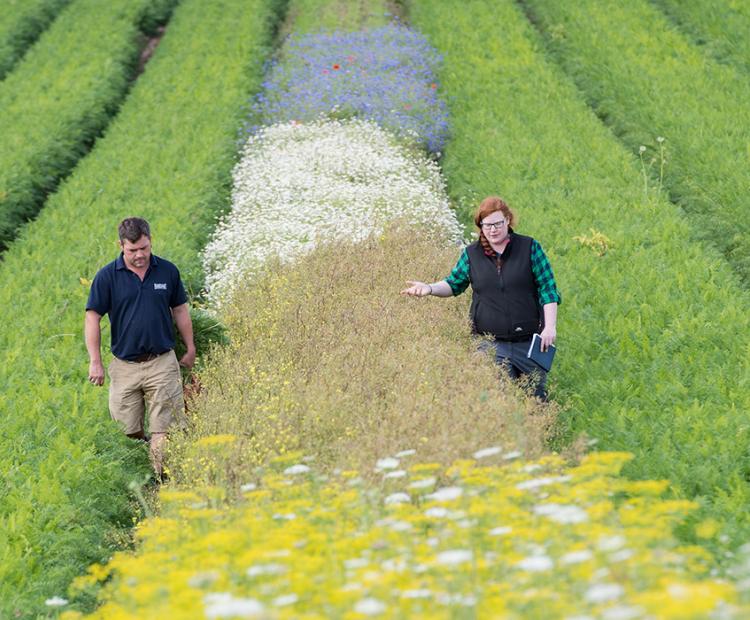
The big picture: using wildflower strips for pest control
They may be beautiful, but these strips prove pretty deadly for every farmer's mortal enemy: aphids
Scientists at Rothamsted Research have successfully developed wheat with dramatically reduced levels of asparagine, without affecting yield, using gene editing techniques, offering a promising route to safer food production and improved regulatory compliance.
Results from two years of field trials demonstrate that wheat produced using CRISPR genome editing can significantly lower concentrations of free asparagine—an amino acid that converts into acrylamide, a toxic and probably carcinogenic compound formed during everyday baking, frying, and toasting.
The study, conducted in collaboration with partners including Karlsruhe Institute of Technology, Leibniz Institute for Food Systems Biology, Technical University of Munich, University of Reading, and Curtis Analytics Limited, compared CRISPR-edited wheat lines with conventionally mutagenised (TILLING) lines (wheat that had its genetic material altered through exposure to a chemical agent to create random mutations).
CRISPR editing targeted the asparagine synthetase-2 (TaASN2) gene, responsible for asparagine production. One edited line also included a partial knockout of the related TaASN1 gene. These targeted edits reduced free asparagine in the grain by 59%, and by up to 93% in the dual-edited line, without any reduction in yield.
By contrast, wheat developed using traditional TILLING methods achieved a 50% reduction in free asparagine but suffered a yield penalty of nearly 25%, likely due to unintended mutations elsewhere in the genome. The results highlight the precision and efficiency of gene editing compared with conventional approaches.
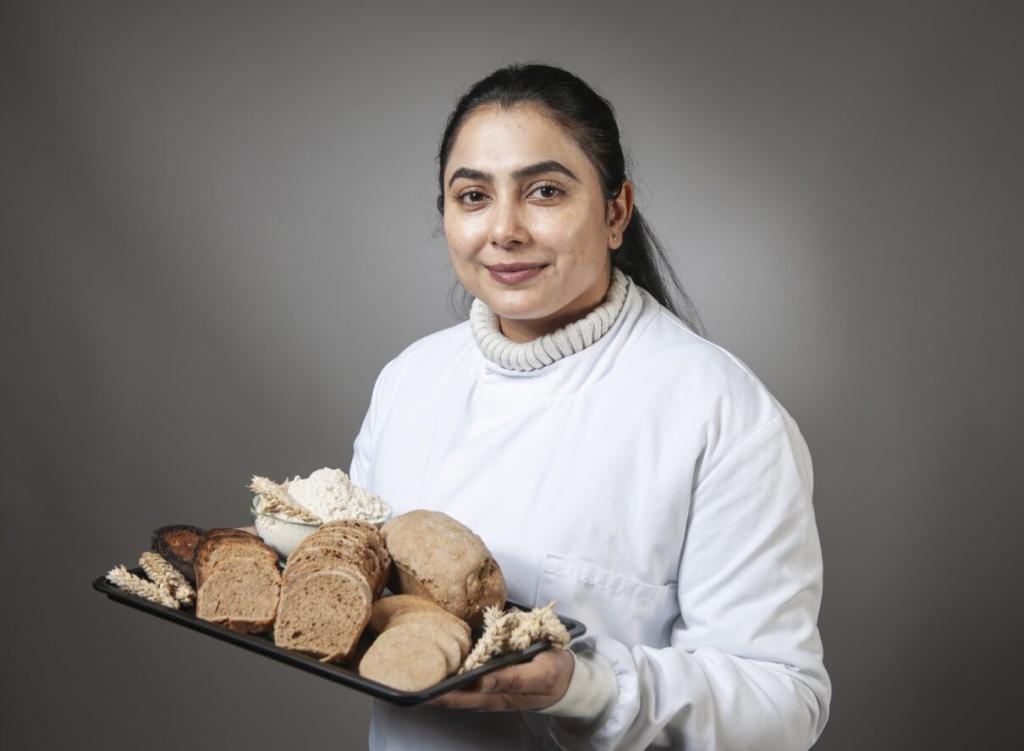
Lead researcher Dr Navneet Kaur, from Rothamsted Research, said:
“This work demonstrates the power of CRISPR technology to deliver precise, beneficial changes in crop genetics. With supportive regulatory frameworks, we can unlock significant benefits for agriculture and food systems.”
Crucially, the reduction in asparagine translated directly into lower acrylamide formation in food products. Bread and biscuits made from the edited wheat showed substantially reduced acrylamide levels, with concentrations in some bread samples falling below detectable limits, even after toasting. In contrast, evidence to date suggests that conventional breeding would be unlikely to deliver a similar improvement.
These findings are particularly timely as regulatory pressure on acrylamide intensifies. Current EU legislation (Regulation (EU) 2017/2158) sets benchmark levels for acrylamide in food, with new Maximum Levels expected from the European Commission this year. These regulations will impact food producers across Europe and international trading partners, including the UK. The research also aligns with recent policy developments for genome edited crops in England, in the form of the Genetic Technology (Precision Breeding) Act 2023.
Professor Nigel Halford from Rothamsted Research, who led the study, said:
“Low acrylamide wheat could enable food businesses to meet evolving safety standards without compromising product quality or incurring major production costs. It also offers a meaningful opportunity to reduce the dietary exposure of consumers to acrylamide.”

Crop Scientist
Rothamsted Research is the longest-running agricultural research institute in the world. We work from gene to field with a proud history of ground-breaking
discoveries in areas as diverse as crop management, statistical interpretation and soil health. Our founders, in 1843, were the pioneers of modern
agriculture, and we are known for our imaginative science and our collaborative approach to developing innovative farm practice.
Through independent research, we make significant contributions to improving agri-food systems in the UK and internationally, with
economic impact estimated to exceed £3 bn in annual contribution to the UK economy. Our strength lies in our systems approach, which combines strategic research,
interdisciplinary teams and multiple partnerships.
Rothamsted is home to three unique National Bioscience Research Infrastructures which are open to researchers from all over the world:
The Long-Term Experiments,
Rothamsted Insect Survey and the
North Wyke Farm Platform.
We are strategically funded by the Biotechnology and Biological Sciences Research Council (BBSRC), with additional support from other national and
international funding streams, and from industry. We are also supported by the Lawes Agricultural Trust (LAT).
The Biotechnology and Biological Sciences Research Council is part of UK Research and Innovation, a non-departmental public body funded by a grant-in-aid
from the UK government.
BBSRC invests to push back the frontiers of biology and deliver a healthy, prosperous and sustainable future. Through our investments, we build and support a vibrant,
dynamic and inclusive community which delivers ground-breaking discoveries and develops bio-based solutions that contribute to tackling global challenges,
such as sustainable food production, climate change, and healthy ageing.
As part of UK Research and Innovation (UKRI), we not only play a pivotal role in fostering connections that enable the UK’s world-class research and innovation system
to flourish – we also have a responsibility to enable the creation of a research culture that is diverse, resilient, and engaged.
BBSRC proudly forges interdisciplinary collaborations where excellent bioscience has a fundamental role. We pioneer approaches that enhance the equality, diversity,
and inclusion of talent by investing in people, infrastructure, technologies, and partnerships on a global scale.
The Lawes Agricultural Trust, established in 1889 by Sir John Bennet Lawes, supports Rothamsted Research’s national and international agricultural science through the provision of land, facilities and funding. LAT, a charitable trust, owns the estates at Harpenden and Broom's Barn, including many of the buildings used by Rothamsted Research. LAT provides an annual research grant to the Director, accommodation for nearly 200 people, and support for fellowships for young scientists from developing countries. LAT also makes capital grants to help modernise facilities at Rothamsted, or invests in new buildings.