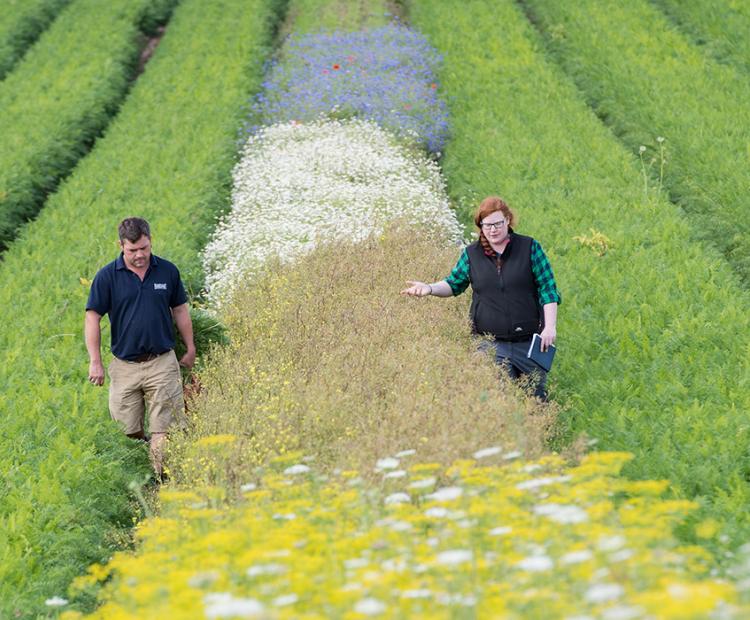
The big picture: using wildflower strips for pest control
They may be beautiful, but these strips prove pretty deadly for every farmer's mortal enemy: aphids
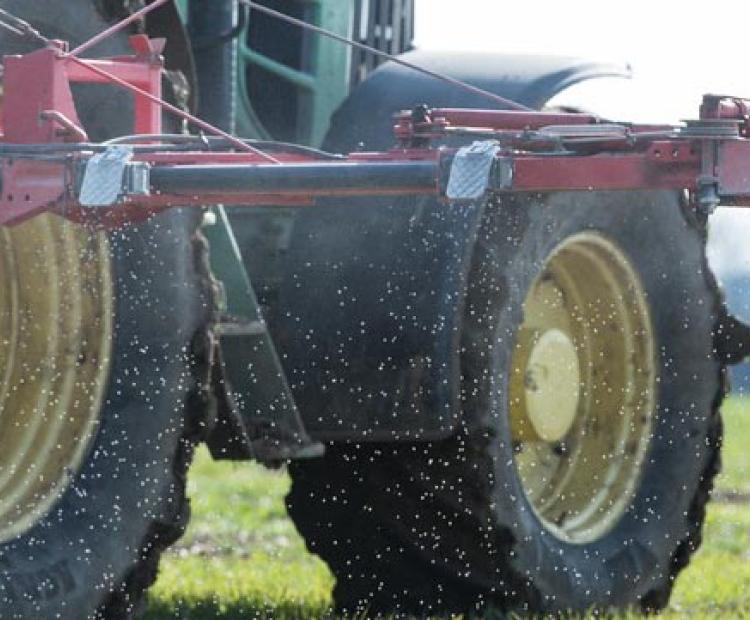
In simulated field experiments, plants sprayed with a mixture of SYN-A and lambda-cyhalothrin increased cabbage stem flea beetle (CSFB) mortality from 20% to 75% and reduced plant damage by at least 50% compared to lambda-cyhalothrin applications alone.
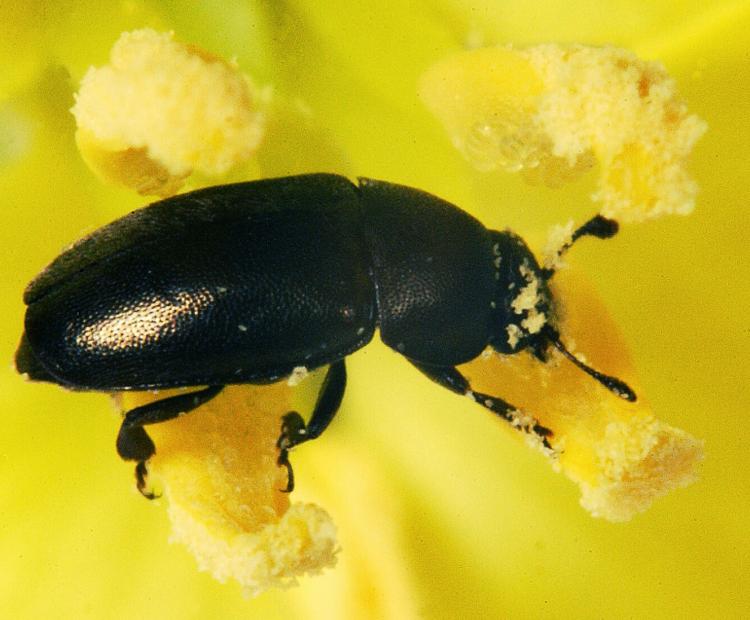
Scientists at Rothamsted Research and Rothamsted business tenant ApresLabs Ltd have demonstrated that SYN-A, a naturally derived synergist extracted from olive oil, can restore the effectiveness of pyrethroid insecticides against CSFB, the most devastating autumn pest of oilseed rape.
The research, published in Pest Management Science, reveals that combining SYN-A with the pyrethroid insecticide lambda-cyhalothrin increases pest mortality such that using just 20% of the standard insecticide rate together with SYN-A achieved 2.2 times greater control than applying the full insecticide dose without the synergist. Dr Samantha Cook, who led the study explained
‘‘CSFB is the No. 1 insect pest of farmers right now due to their inability to control it using traditional insecticides as the EU have banned neonicotinoid seed treatments and the beetles have developed resistance against the permitted pyrethroid insecticide sprays. This tiny beetle is threatening oilseed rape production throughout the UK and much of Europe. The industry badly needs alternatives, but these are some way off in the development pipeline.’’
How it works
SYN-A functions by inhibiting cytochrome P450 and esterase enzymes - key metabolic pathways that resistant insects use to break down insecticides. Laboratory studies demonstrated that this natural compound effectively blocks these detoxification mechanisms in CSFB.
Dr Graham Moores, Founder of ApresLabs Ltd who discovered, developed and patented SYN-A commented “I have long felt that synergists should be utilised to a greater extent in agriculture; SYN-A is a natural extract that allows a reduction in insecticidal rates whilst still overcoming resistance problems, with the concomitant environmental benefits this brings”.
Environmental considerations
While the findings offer promise to control CSFB, it has also been shown in the laboratory that SYN-A when mixed with lambda-cyhalothrin, similarly affected Microctonus brassicae, a beneficial parasitoid wasp that naturally controls adult CSFB. Dr Patricia Ortega-Ramos who carried out the study commented
"Microctonus brassicae is an important natural enemy of the adult form of CSFB; females use their ‘stinger’ to lay an egg inside the beetle and the parasitoid larva develops inside the living beetle killing it when exiting the host ready to pupate. It provides important natural control of CSFB and needs to be protected and encouraged in the farmed environment."
The authors emphasize that these potential impacts on beneficial parasitoids highlight the importance of designing careful implementation strategies, including precision application outside peak parasitoid activity and continued evaluation of other non-target effects.
The findings align with European Union targets to reduce insecticide use while maintaining effective pest control. By potentially allowing farmers to use 80% less insecticide while achieving superior control, SYN-A could represent a significant step toward more sustainable agriculture. With few new active ingredients coming to market, compounds like SYN-A may extend the useful life of existing insecticides by overcoming resistance mechanisms. The research team emphasizes that larger-scale field trials are needed to validate these findings at full field scale under realistic farming conditions.
The work was funded by a UK BBSRC Innovation fund allocated to Rothamsted Enterprises Ltd.

Behavioural Ecologist

Insect Ecologist
Rothamsted Research is the longest-running agricultural research institute in the world. We work from gene to field with a proud history of ground-breaking
discoveries in areas as diverse as crop management, statistical interpretation and soil health. Our founders, in 1843, were the pioneers of modern
agriculture, and we are known for our imaginative science and our collaborative approach to developing innovative farm practice.
Through independent research, we make significant contributions to improving agri-food systems in the UK and internationally, with
economic impact estimated to exceed £3 bn in annual contribution to the UK economy. Our strength lies in our systems approach, which combines strategic research,
interdisciplinary teams and multiple partnerships.
Rothamsted is home to three unique National Bioscience Research Infrastructures which are open to researchers from all over the world:
The Long-Term Experiments,
Rothamsted Insect Survey and the
North Wyke Farm Platform.
We are strategically funded by the Biotechnology and Biological Sciences Research Council (BBSRC), with additional support from other national and
international funding streams, and from industry. We are also supported by the Lawes Agricultural Trust (LAT).
The Biotechnology and Biological Sciences Research Council is part of UK Research and Innovation, a non-departmental public body funded by a grant-in-aid
from the UK government.
BBSRC invests to push back the frontiers of biology and deliver a healthy, prosperous and sustainable future. Through our investments, we build and support a vibrant,
dynamic and inclusive community which delivers ground-breaking discoveries and develops bio-based solutions that contribute to tackling global challenges,
such as sustainable food production, climate change, and healthy ageing.
As part of UK Research and Innovation (UKRI), we not only play a pivotal role in fostering connections that enable the UK’s world-class research and innovation system
to flourish – we also have a responsibility to enable the creation of a research culture that is diverse, resilient, and engaged.
BBSRC proudly forges interdisciplinary collaborations where excellent bioscience has a fundamental role. We pioneer approaches that enhance the equality, diversity,
and inclusion of talent by investing in people, infrastructure, technologies, and partnerships on a global scale.
The Lawes Agricultural Trust, established in 1889 by Sir John Bennet Lawes, supports Rothamsted Research’s national and international agricultural science through the provision of land, facilities and funding. LAT, a charitable trust, owns the estates at Harpenden and Broom's Barn, including many of the buildings used by Rothamsted Research. LAT provides an annual research grant to the Director, accommodation for nearly 200 people, and support for fellowships for young scientists from developing countries. LAT also makes capital grants to help modernise facilities at Rothamsted, or invests in new buildings.