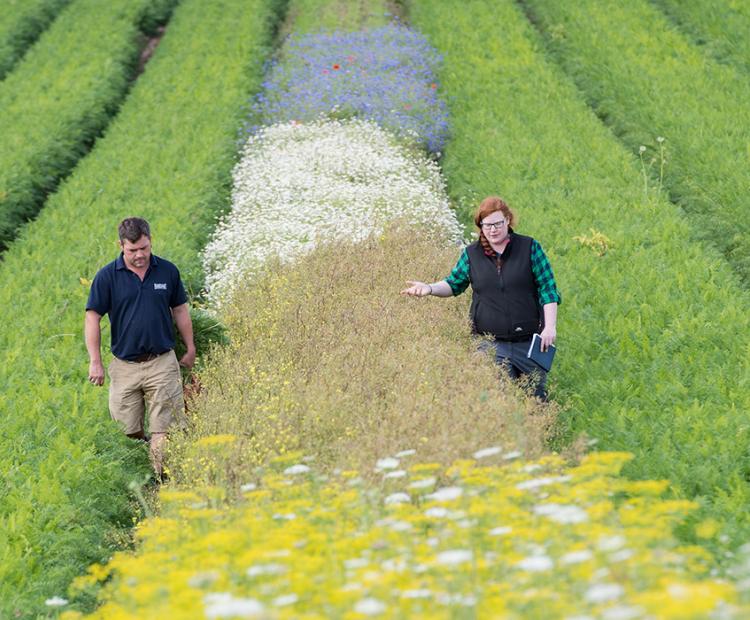
The big picture: using wildflower strips for pest control
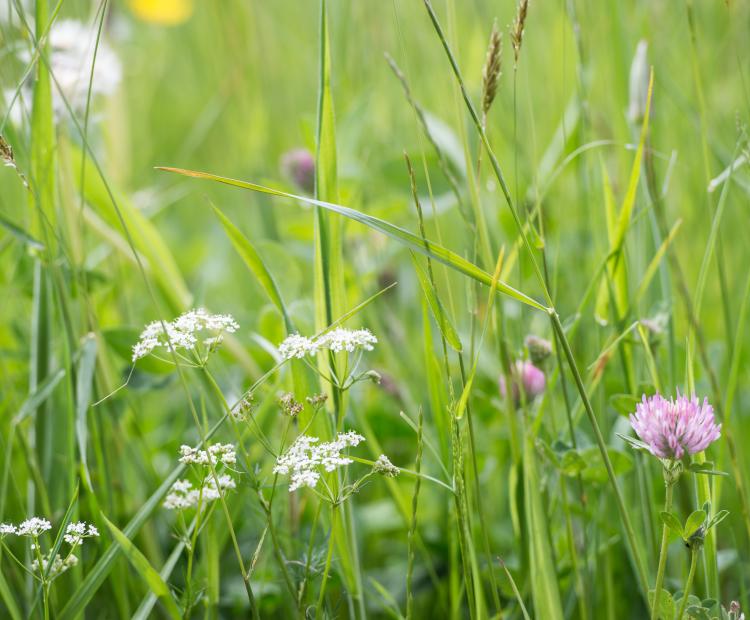
They may be beautiful, but these strips prove pretty deadly for every farmer's mortal enemy: aphids
A crop biotechnology venture originating from Rothamsted Research and University of Oxford has secured £2.5 million in strategic investment from The Mosaic Company to accelerate development of a new class of precision crop biostimulants.
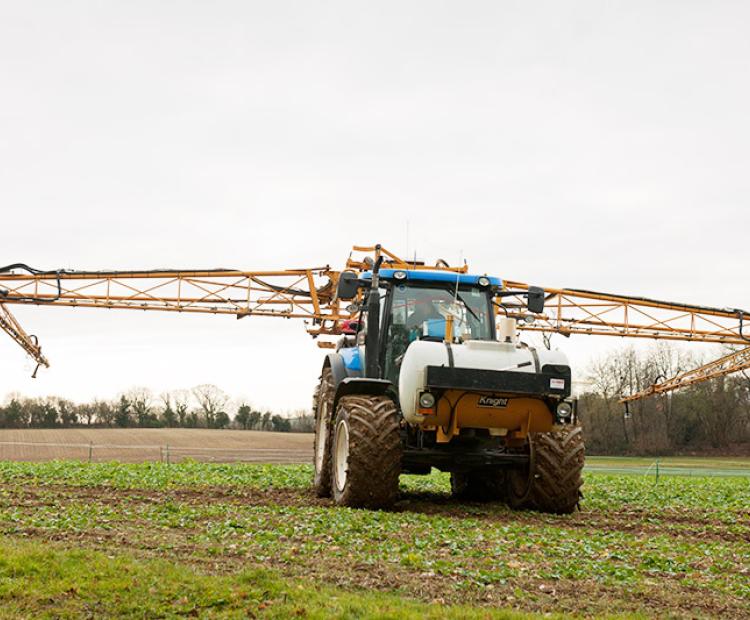
The investment forms part of SugaROx’s ongoing Series A fundraising round and will support expanded international field trials, regulatory activities and commercial scale-up of the company’s product platform, and flagship biostimulant based on trehalose-6-phosphate (T6P).
T6P is a naturally occurring signalling molecule that regulates carbon allocation and utilisation within plants. SugaROx has developed proprietary delivery technologies that enable these highly polar biomolecules to be applied exogenously through conventional agricultural spray systems.
The platform technology emerged from collaborative research spanning plant metabolism, signalling biology and synthetic chemistry at Rothamsted Research and Oxford University. The company’s lead products are designed to improve crop yield, resilience and nutrient use efficiency by modulating key intracellular metabolic pathways.
Dr Cara Griffiths, Senior Research Scientist at Rothamsted Research, co-founder and Chief Scientific Officer of SugaROx, has played a leading role in translating the underlying biology into scalable agricultural technologies. Dr Griffiths said:
“One of the major challenges in this field has been translating highly complex plant signalling biology into technologies that can function consistently under real agricultural conditions. Our work has focused on bridging fundamental discovery science with practical delivery systems that can ultimately support more productive and resilient cropping systems.”
The investment from Mosaic follows an earlier seed-stage investment supporting scale-up of T6P production and initial international field validation activities.
SugaROx will now expand field evaluation programmes across multiple crops and environments in preparation for planned commercial launches in the UK, Europe and North America between 2027 and 2030.
The work reflects Rothamsted Research’s continued focus on translational science and the development of innovative technologies to address long-term challenges in agricultural productivity and sustainability.

Molecular Biologist - Biochemist
Rothamsted Research is the longest-running agricultural research institute in the world. We work from gene to field with a proud history of ground-breaking
discoveries in areas as diverse as crop management, statistical interpretation and soil health. Our founders, in 1843, were the pioneers of modern
agriculture, and we are known for our imaginative science and our collaborative approach to developing innovative farm practice.
Through independent research, we make significant contributions to improving agri-food systems in the UK and internationally, with
economic impact estimated to exceed £3 bn in annual contribution to the UK economy. Our strength lies in our systems approach, which combines strategic research,
interdisciplinary teams and multiple partnerships.
Rothamsted is home to three unique National Bioscience Research Infrastructures which are open to researchers from all over the world:
The Long-Term Experiments,
Rothamsted Insect Survey and the
North Wyke Farm Platform.
We are strategically funded by the Biotechnology and Biological Sciences Research Council (BBSRC), with additional support from other national and
international funding streams, and from industry. We are also supported by the Lawes Agricultural Trust (LAT).
The Biotechnology and Biological Sciences Research Council is part of UK Research and Innovation, a non-departmental public body funded by a grant-in-aid
from the UK government.
BBSRC invests to push back the frontiers of biology and deliver a healthy, prosperous and sustainable future. Through our investments, we build and support a vibrant,
dynamic and inclusive community which delivers ground-breaking discoveries and develops bio-based solutions that contribute to tackling global challenges,
such as sustainable food production, climate change, and healthy ageing.
As part of UK Research and Innovation (UKRI), we not only play a pivotal role in fostering connections that enable the UK’s world-class research and innovation system
to flourish – we also have a responsibility to enable the creation of a research culture that is diverse, resilient, and engaged.
BBSRC proudly forges interdisciplinary collaborations where excellent bioscience has a fundamental role. We pioneer approaches that enhance the equality, diversity,
and inclusion of talent by investing in people, infrastructure, technologies, and partnerships on a global scale.
The Lawes Agricultural Trust, established in 1889 by Sir John Bennet Lawes, supports Rothamsted Research’s national and international agricultural science through the provision of land, facilities and funding. LAT, a charitable trust, owns the estates at Harpenden and Broom's Barn, including many of the buildings used by Rothamsted Research. LAT provides an annual research grant to the Director, accommodation for nearly 200 people, and support for fellowships for young scientists from developing countries. LAT also makes capital grants to help modernise facilities at Rothamsted, or invests in new buildings.