The big picture: using wildflower strips for pest control
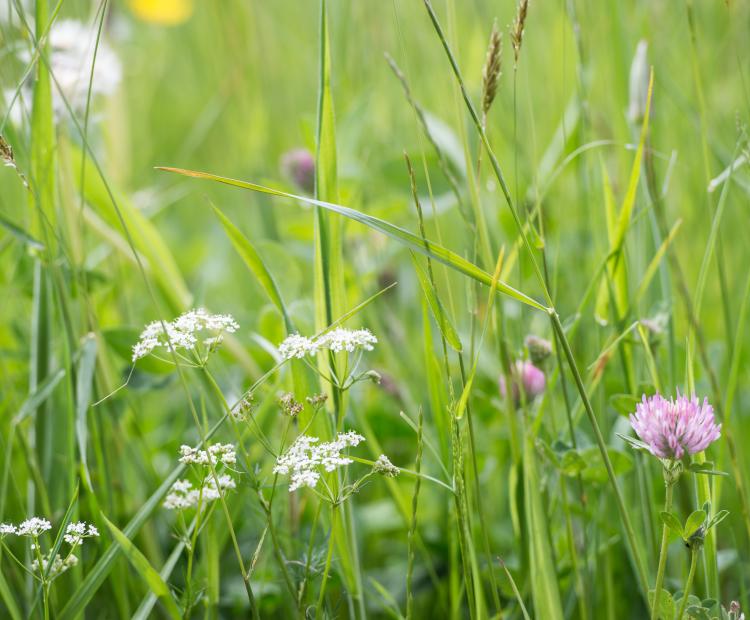
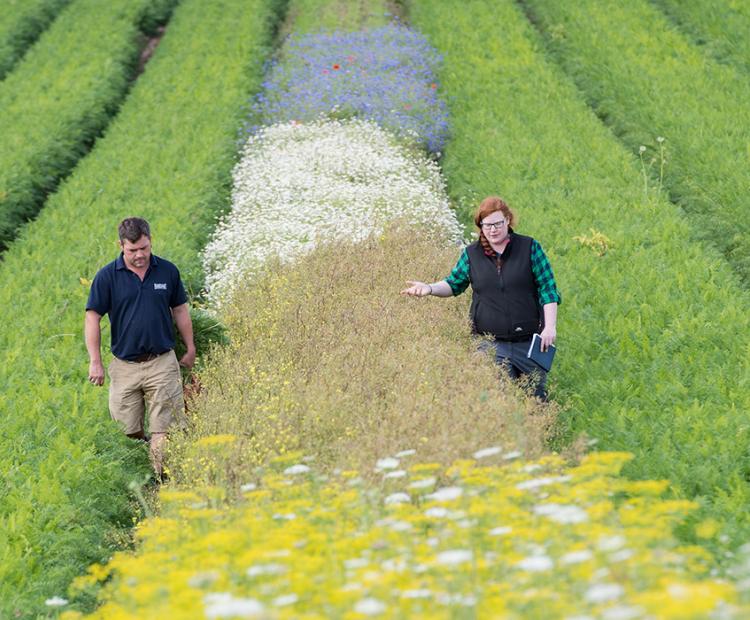
They may be beautiful, but these strips prove pretty deadly for every farmer's mortal enemy: aphids
Rothamsted Research has joined the UK’s foremost research agencies and institutes in launching the National Research Organisations (NRO) Group, a new alliance of 35 organisations dedicated to advancing science for the benefit of people, communities, the economy and national priorities.
As a founding member, Rothamsted brings more than 180 years of agricultural and environmental science to this national initiative, contributing world-leading expertise in crop science, sustainable farming systems, and environmental stewardship. The NRO Group brings together organisations with capabilities that are critical for the UK’s prosperity, food security, resilience and progress toward environmental goals.
The NRO Group has been established to address fragmentation across the UK research landscape and unlock the full potential of national research organisations (NROs). This includes strengthening governance, improving strategic alignment and increasing visibility of the UK’s research infrastructure. By providing a unified and authoritative interface for government, academia and industry, the Group ensures science-based insight informs decision-making and supports national priorities—from improving people’s lives and boosting growth to securing national resilience and accelerating progress toward net zero.
Science Minister Lord Vallance said:
“Research and Development is essential to building a better Britain. From new treatments for cancer, to breakthroughs in clean energy or developing the computers of the future, the path to a stronger economy and society will be dependent on science and innovation.”
“There has never been a better time for the UK's research institutes and public research bodies to pull together. By aligning their capabilities to deliver maximum impact, the NRO Group will be a key part of our efforts to ensure that science and technology benefits everyone.”
The NRO Group brings together research agencies and institutes that deliver both curiosity-driven and mission-focused science—from the search for new antibiotics to the development of next-generation clean aviation technologies. A formal partnership agreement underpins the Group, ensuring it delivers maximum value to the UK economy, national security and the lives of citizens.
Professor Sir Ian Chapman, CEO of UK Research and Innovation, said:
“Our National Research Organisations are a real asset for the UK, providing world-class facilities and researchers. By coming together in this way, they have the opportunity to improve efficiency, allowing the whole to be greater than the sum of the parts. By focusing their efforts, the NRO can play an important role in improving lives and driving growth across the UK.”
Professor Martin Broadley, Science Director at Rothamsted Research, said:
“Rothamsted has a long history of delivering science that strengthens the UK’s resilience—from crop innovations to soil health and sustainable farming systems. By joining the NRO Group, we can amplify our impact, build stronger national partnerships and ensure that agricultural and environmental science continues to play a central role in addressing the UK’s most pressing challenges.”
Rothamsted Research is the longest-running agricultural research institute in the world. We work from gene to field with a proud history of ground-breaking
discoveries in areas as diverse as crop management, statistical interpretation and soil health. Our founders, in 1843, were the pioneers of modern
agriculture, and we are known for our imaginative science and our collaborative approach to developing innovative farm practice.
Through independent research, we make significant contributions to improving agri-food systems in the UK and internationally, with
economic impact estimated to exceed £3 bn in annual contribution to the UK economy. Our strength lies in our systems approach, which combines strategic research,
interdisciplinary teams and multiple partnerships.
Rothamsted is home to three unique National Bioscience Research Infrastructures which are open to researchers from all over the world:
The Long-Term Experiments,
Rothamsted Insect Survey and the
North Wyke Farm Platform.
We are strategically funded by the Biotechnology and Biological Sciences Research Council (BBSRC), with additional support from other national and
international funding streams, and from industry. We are also supported by the Lawes Agricultural Trust (LAT).
The Biotechnology and Biological Sciences Research Council is part of UK Research and Innovation, a non-departmental public body funded by a grant-in-aid
from the UK government.
BBSRC invests to push back the frontiers of biology and deliver a healthy, prosperous and sustainable future. Through our investments, we build and support a vibrant,
dynamic and inclusive community which delivers ground-breaking discoveries and develops bio-based solutions that contribute to tackling global challenges,
such as sustainable food production, climate change, and healthy ageing.
As part of UK Research and Innovation (UKRI), we not only play a pivotal role in fostering connections that enable the UK’s world-class research and innovation system
to flourish – we also have a responsibility to enable the creation of a research culture that is diverse, resilient, and engaged.
BBSRC proudly forges interdisciplinary collaborations where excellent bioscience has a fundamental role. We pioneer approaches that enhance the equality, diversity,
and inclusion of talent by investing in people, infrastructure, technologies, and partnerships on a global scale.
The Lawes Agricultural Trust, established in 1889 by Sir John Bennet Lawes, supports Rothamsted Research’s national and international agricultural science through the provision of land, facilities and funding. LAT, a charitable trust, owns the estates at Harpenden and Broom's Barn, including many of the buildings used by Rothamsted Research. LAT provides an annual research grant to the Director, accommodation for nearly 200 people, and support for fellowships for young scientists from developing countries. LAT also makes capital grants to help modernise facilities at Rothamsted, or invests in new buildings.