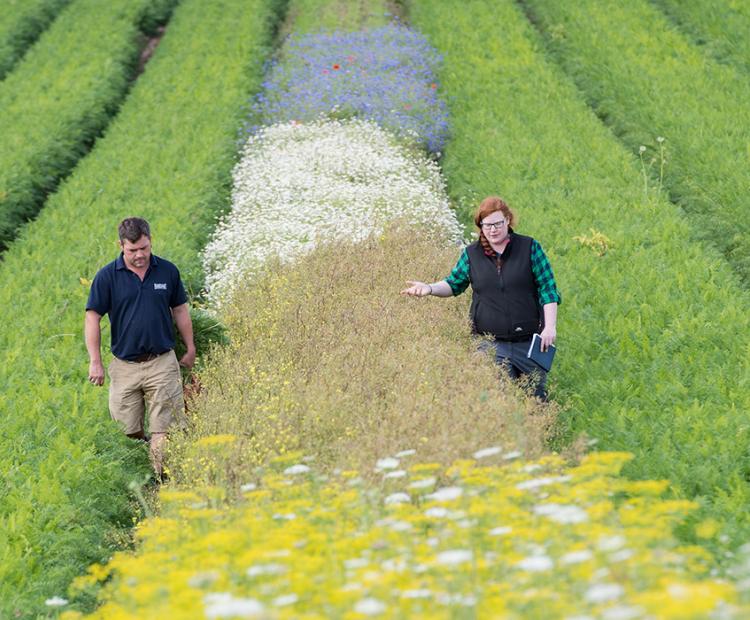
The big picture: using wildflower strips for pest control
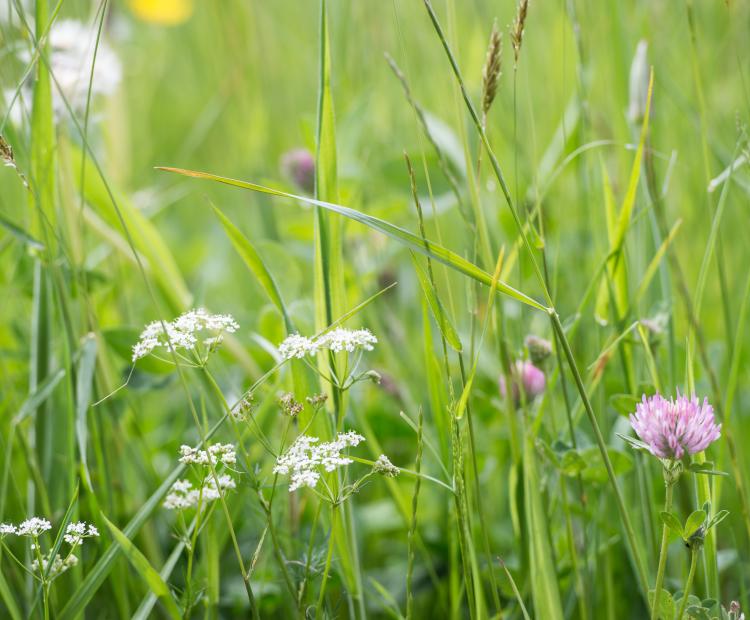
They may be beautiful, but these strips prove pretty deadly for every farmer's mortal enemy: aphids
Scientists at Rothamsted Research have discovered that three widely used pre-emergent herbicides - flufenacet, EPTC, and tri-allate - affect blackgrass (Alopecurus myosuroides) in strikingly different ways. The findings, published in Frontiers in Agronomy shed light on the complex biochemical mechanisms behind herbicide action in one of the UK’s most persistent agricultural weeds. By revealing how Group 15 herbicides act differently, this work supports more targeted and effective use of pre-emergent herbicides in integrated weed management.
Blackgrass costs UK farmers millions in lost yields each year and has evolved resistance to multiple herbicide groups, making effective control increasingly challenging. Group 15 herbicides, described as those that affect shoot growth by inhibiting very long-chain fatty acid synthesis, are a cornerstone of weed control strategies. However, there were always questions on whether this generic label was appropriate as until now, little was known about how these herbicides affect blackgrass at the physiological or molecular level.
Using controlled growth experiments and advanced lipid profiling, the team found that:
EPTC had milder effects, altering wax composition more than fatty acid profiles.
“Looking at physiology or metabolism, it is clear these herbicides don’t all work the same way,” said Dr Dana MacGregor, lead author and Research Scientist at Rothamsted. “Although these three herbicides are grouped together, their effects on plant growth and metabolism are different. Understanding these differences is not only scientifically interesting, but it also helps farmers and agronomists choose the right product for the right situation.”
Co-author Frédéric Beaudoin, a lipid metabolism specialist at Rothamsted, added:
“Fatty acid and lipid metabolic pathways are complex and interconnected with other metabolic processes. Blackgrass’s wax profile is unusual compared to most other grasses. By studying how these herbicides influence it, we not only learn about their activity but also gain fundamental insights into their molecular targets and Mode of Action (MoA), which we now believe to be more complicated than initially thought.”
Industry partner Laurent Cornette from Gowan Crop Protection commented:
“For farmers, these findings strengthen the confidence with which we can combine different pre-emergence herbicides from Group 15. Group 15 encompasses a broad range of compounds that share the same physiological effect but differ in their modes and sites of action. Notably, no cases of target-site resistance have ever been reported for Group 15 herbicides, giving them a distinctive status as low-risk resistance compounds. Their use can therefore contribute to preserving the efficacy of other herbicide groups by helping to delay resistance development.”
The study also compared two blackgrass biotypes: one herbicide-sensitive and one with metabolic resistance. Responses varied significantly between them.
“There’s no evidence of resistance to Group 15 herbicides in blackgrass, but populations from different fields can behave very differently,” explained Dr Hannah Blyth, lead author on the paper. “Studying these differences gives us insight into how physiological, genetic or metabolic traits shape herbicide responses and helps us design better strategies for sustainable weed control.”
The research was funded by the Biotechnology and Biological Sciences Research Council (BBSRC) and supported by Gowan Crop Protection Limited.

Post Doctoral Researcher

Weed Molecular Biologist

Plant Lipid Biochemist
Rothamsted Research is the longest-running agricultural research institute in the world. We work from gene to field with a proud history of ground-breaking
discoveries in areas as diverse as crop management, statistical interpretation and soil health. Our founders, in 1843, were the pioneers of modern
agriculture, and we are known for our imaginative science and our collaborative approach to developing innovative farm practice.
Through independent research, we make significant contributions to improving agri-food systems in the UK and internationally, with
economic impact estimated to exceed £3 bn in annual contribution to the UK economy. Our strength lies in our systems approach, which combines strategic research,
interdisciplinary teams and multiple partnerships.
Rothamsted is home to three unique National Bioscience Research Infrastructures which are open to researchers from all over the world:
The Long-Term Experiments,
Rothamsted Insect Survey and the
North Wyke Farm Platform.
We are strategically funded by the Biotechnology and Biological Sciences Research Council (BBSRC), with additional support from other national and
international funding streams, and from industry. We are also supported by the Lawes Agricultural Trust (LAT).
The Biotechnology and Biological Sciences Research Council is part of UK Research and Innovation, a non-departmental public body funded by a grant-in-aid
from the UK government.
BBSRC invests to push back the frontiers of biology and deliver a healthy, prosperous and sustainable future. Through our investments, we build and support a vibrant,
dynamic and inclusive community which delivers ground-breaking discoveries and develops bio-based solutions that contribute to tackling global challenges,
such as sustainable food production, climate change, and healthy ageing.
As part of UK Research and Innovation (UKRI), we not only play a pivotal role in fostering connections that enable the UK’s world-class research and innovation system
to flourish – we also have a responsibility to enable the creation of a research culture that is diverse, resilient, and engaged.
BBSRC proudly forges interdisciplinary collaborations where excellent bioscience has a fundamental role. We pioneer approaches that enhance the equality, diversity,
and inclusion of talent by investing in people, infrastructure, technologies, and partnerships on a global scale.
The Lawes Agricultural Trust, established in 1889 by Sir John Bennet Lawes, supports Rothamsted Research’s national and international agricultural science through the provision of land, facilities and funding. LAT, a charitable trust, owns the estates at Harpenden and Broom's Barn, including many of the buildings used by Rothamsted Research. LAT provides an annual research grant to the Director, accommodation for nearly 200 people, and support for fellowships for young scientists from developing countries. LAT also makes capital grants to help modernise facilities at Rothamsted, or invests in new buildings.