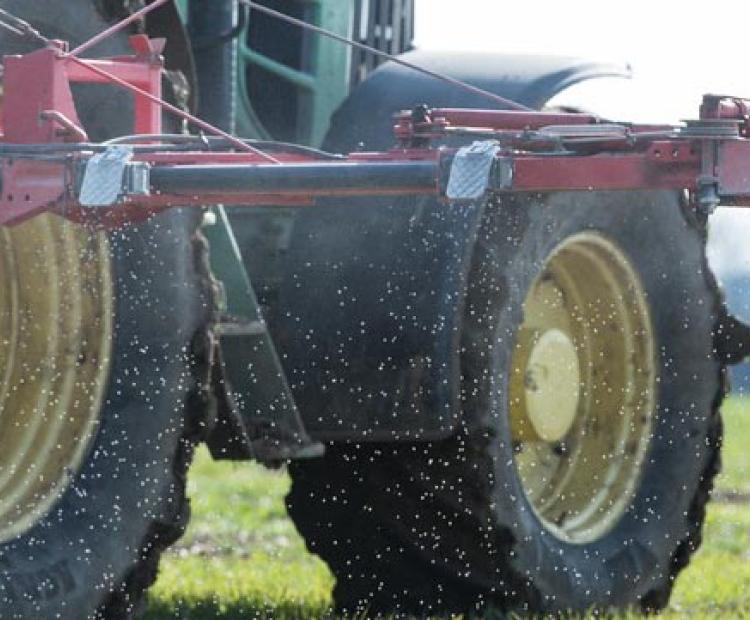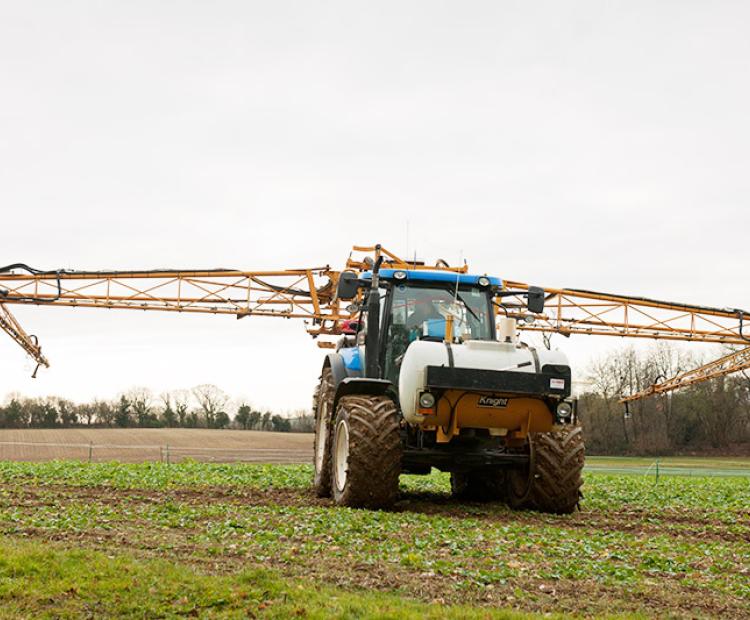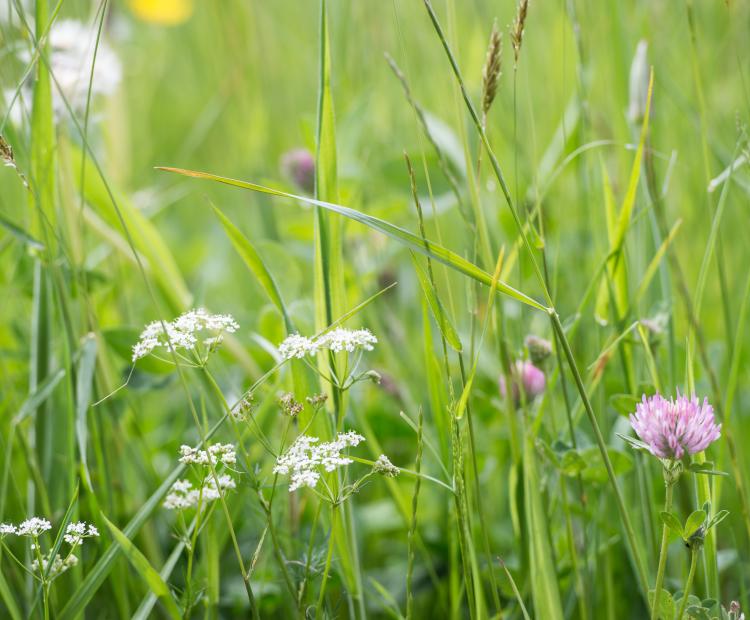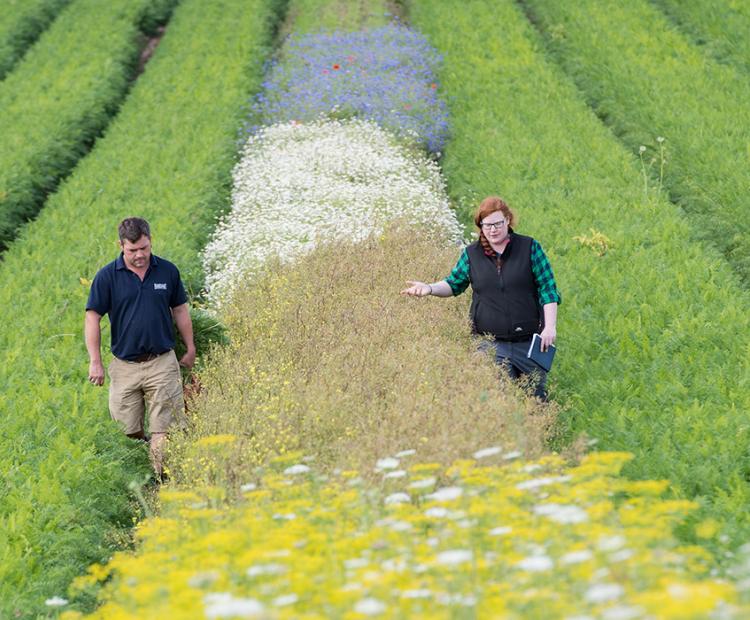
The big picture: using wildflower strips for pest control
They may be beautiful, but these strips prove pretty deadly for every farmer's mortal enemy: aphids

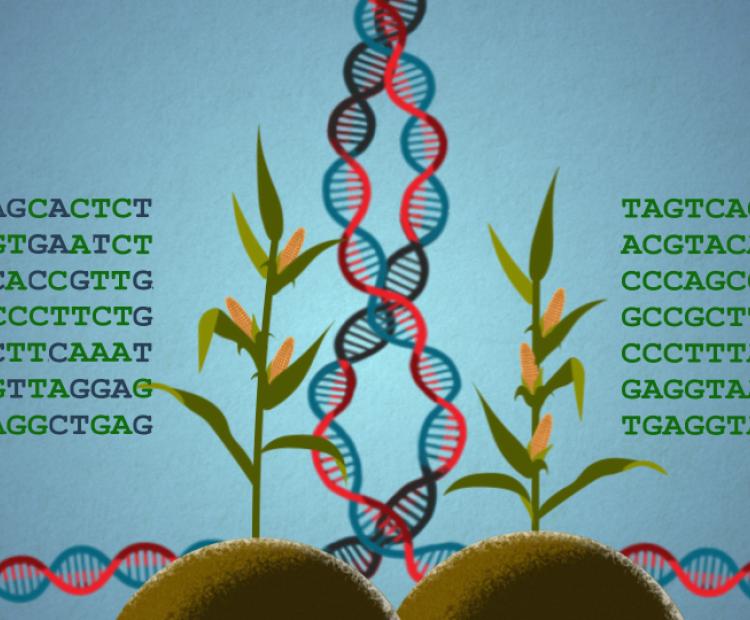
Scientists at Rothamsted and Clemson University have brought together, for the first time, a rapidly expanding but fragmented body of research to reveal how a little‑known form of DNA called extrachromosomal circular DNA, or eccDNA may act as a powerful “genomic shock absorber” in plants.
The comprehensive review synthesises findings from dozens of independent studies and reorganises them into a clear, unified framework showing that eccDNA is a dynamic, functional, and previously under‑appreciated layer of genome plasticity. By mapping and interpreting data scattered across multiple disciplines including weed science, molecular genetics, crop physiology, and bioinformatics, the authors suggest that eccDNA enables plants to buffer stress and accelerates adaptation beyong what chromosomes alone can achieve.
Dr Dana MacGregor, lead author of the review, said:
“When you put this body of literature together a powerful story becomes visible, especially when you line up the evidence from many different systems. We pulled together data that had never been considered side‑by‑side, and a coherent picture began to emerge: eccDNAs behave as rapid‑response, non‑Mendelian genetic units that help plants survive change.”
A New Lens on Plant Adaptation
While most plant genetics focuses on chromosomal DNA, the review highlights that these small DNA circles that replicate independently in the nucleus are far more prevalent, diverse, and functionally important than previously recognised.
Across studies, eccDNAs consistently appear to:
By comparing findings from weeds, crops, and model species the review shows that these DNA circles form, evolve, and function across a much broader biological context than anyone field had previously recognised.
Connecting Disparate Threads Into a Single Narrative
eccDNA research has exploded in recent years, but much of the work remains siloed, focusing separately on stress responses, herbicide resistance, transposon biology, epigenetics, sequencing technologies, or genome evolution.
Dr. Chris Saski’s group at Clemson University has helped establish the foundation of what we know about plant eccDNA through pioneering studies in Palmer amaranth and blackgrass. The Rothamsted–Clemson team’s contribution is to assemble these lines of evidence together into a single, integrated concept:
“What we’ve done is take a scattered landscape of results and show they all point to the same natural mechanism,” said co‑author Professor Christopher Saski of Clemson University, “Plants use eccDNA to adjust gene dosage, generate new variation, and withstand stress. This is a fascinating mechanism that enables adaptation in real time.”
The review reframes eccDNA not as genomic debris but as an adaptive system: a mobile, modular, and responsive layer of genetic plasticity.
Implications for Climate‑Ready Agriculture
By synthesising insights from weeds, plants renowned for their extraordinary ability to survive herbicides, drought, and other extreme pressures, the authors highlight how eccDNA may drive rapid adaptation under intense selection.
The review argues that these mechanisms could inspire new ways of building resilience into crops, especially through:
Crucially, the paper emphasises that no single study could have revealed this roadmap. Only by integrating evidence across species, technologies, and stress conditions does the circulome’s role in plant adaptability come into focus.
A Platform for Future Discovery
The authors outline priority areas for future research, including mapping eccDNA dynamics across stresses, deciphering how they form and persist, and developing biotechnological tools to harness - or inhibit - them in crops, pathogens, and weeds.
“This review pulls the field together...”, said MacGregor, “...our goal was to turn a scattered set of observations into a coherent framework that researchers, breeders, and biotechnologists can build upon.”
The work was supported by strategic funding from the Biotechnology and Biological Sciences Research Council (BBSRC) and the U.S. Department of Agriculture.

Weed Molecular Biologist
Rothamsted Research is the longest-running agricultural research institute in the world. We work from gene to field with a proud history of ground-breaking
discoveries in areas as diverse as crop management, statistical interpretation and soil health. Our founders, in 1843, were the pioneers of modern
agriculture, and we are known for our imaginative science and our collaborative approach to developing innovative farm practice.
Through independent research, we make significant contributions to improving agri-food systems in the UK and internationally, with
economic impact estimated to exceed £3 bn in annual contribution to the UK economy. Our strength lies in our systems approach, which combines strategic research,
interdisciplinary teams and multiple partnerships.
Rothamsted is home to three unique National Bioscience Research Infrastructures which are open to researchers from all over the world:
The Long-Term Experiments,
Rothamsted Insect Survey and the
North Wyke Farm Platform.
We are strategically funded by the Biotechnology and Biological Sciences Research Council (BBSRC), with additional support from other national and
international funding streams, and from industry. We are also supported by the Lawes Agricultural Trust (LAT).
The Biotechnology and Biological Sciences Research Council is part of UK Research and Innovation, a non-departmental public body funded by a grant-in-aid
from the UK government.
BBSRC invests to push back the frontiers of biology and deliver a healthy, prosperous and sustainable future. Through our investments, we build and support a vibrant,
dynamic and inclusive community which delivers ground-breaking discoveries and develops bio-based solutions that contribute to tackling global challenges,
such as sustainable food production, climate change, and healthy ageing.
As part of UK Research and Innovation (UKRI), we not only play a pivotal role in fostering connections that enable the UK’s world-class research and innovation system
to flourish – we also have a responsibility to enable the creation of a research culture that is diverse, resilient, and engaged.
BBSRC proudly forges interdisciplinary collaborations where excellent bioscience has a fundamental role. We pioneer approaches that enhance the equality, diversity,
and inclusion of talent by investing in people, infrastructure, technologies, and partnerships on a global scale.
The Lawes Agricultural Trust, established in 1889 by Sir John Bennet Lawes, supports Rothamsted Research’s national and international agricultural science through the provision of land, facilities and funding. LAT, a charitable trust, owns the estates at Harpenden and Broom's Barn, including many of the buildings used by Rothamsted Research. LAT provides an annual research grant to the Director, accommodation for nearly 200 people, and support for fellowships for young scientists from developing countries. LAT also makes capital grants to help modernise facilities at Rothamsted, or invests in new buildings.