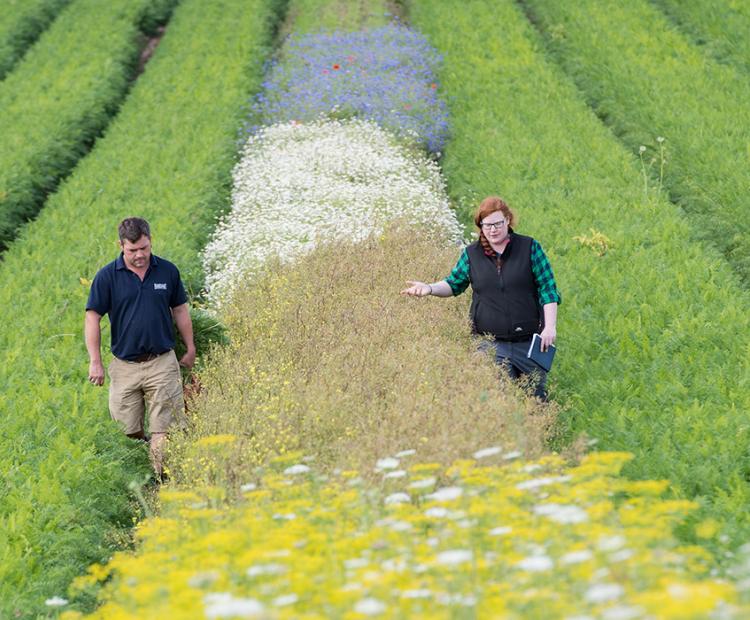
The big picture: using wildflower strips for pest control
They may be beautiful, but these strips prove pretty deadly for every farmer's mortal enemy: aphids
A new study from Rothamsted Research has developed a pipeline to help expedite the discovery of microbial compounds with potential to become future fungicide leads. The work uses a high-throughput in vitro bioassay to identify environmental bacterial isolates that antagonise Z. tritici, before combining this with genome mining, mutagenesis and analytical chemistry to pinpoint the compounds responsible.
Septoria tritici blotch is one of the most important diseases of wheat in the UK, and Z. tritici has repeatedly evolved insensitivity to classes of commercial fungicides. That makes the search for new modes of control increasingly urgent.
The pipeline was developed within Rothamsted’s Growing Health Institute Strategic Programme and supported by UKRI through the Biotechnology and Biological Sciences Research Council (BBSRC).
In the study, the team screened a library of 534 environmental Pseudomonas isolates and identified 52 that could suppress a standard Z. tritici strain. They then tested selected promising bacterial isolates against a genetically diverse Z. tritici panel of 12 isolates collected from across Europe. This revealed significant differences in how strongly different fungal isolates were inhibited, showing that activity against a single reference strain may not tell the whole story. The findings make a clear case for testing future antifungal leads against genetically diverse pathogen panels earlier in discovery, rather than assuming that one strain can stand in for the wider pathogen population.
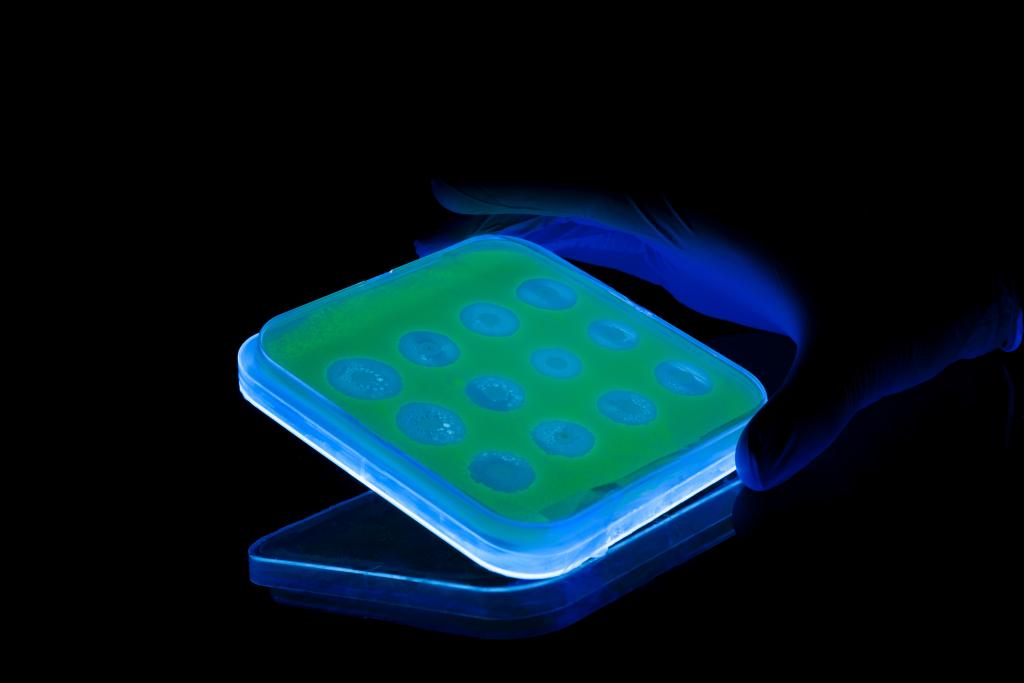
The team then began to uncover the biology behind the effect. Their analysis pointed to bacterial genes linked to the production of antifungal molecules, including the known antifungal compound 2,4-diacetylphloroglucinol (2,4-DAPG). In a proof-of-concept experiment, disruption of a key gene involved in 2,4-DAPG production caused the bacterial mutant to lose both 2,4-DAPG production and its ability to visibly inhibit Z. tritici in the assay.
Crucially, the study also identified antagonistic isolates whose activity could not be readily explained by similarity to known reference gene clusters. That suggests some strains may produce previously unknown antifungal molecules, giving researchers a practical route to prioritise the most promising candidates for further investigation.
Dr George Lund, lead author of the study at Rothamsted Research, said:
“Zymoseptoria tritici remains a major challenge for wheat production, and new solutions are urgently needed for farmers. What this pipeline gives us is a practical way to search for future fungicide leads from bacteria in a much more informed way. It also allows us to test candidates against genetically diverse Zymoseptoria isolates early in the process. That matters because activity seen against one strain may not always translate across the wider pathogen population, so this gives us a better way to decide which microbial metabolites are most worth pursuing.”
Dr Tim Mauchline, senior author at Rothamsted Research, said:
“The development of microbiome facilitated agriculture relies on researchers understanding microbial function to enhance agricultural production. The work in this study allows us to mine and fast-track the deployment of candidate fungicidal bacteria for biological control as well as to identify novel chemistry for the next generation of synthetic fungicides.”
Although the work was carried out in vitro and does not yet demonstrate field performance, it establishes a scalable and cost-effective route for finding and prioritising candidate antifungal metabolites against Z. tritici. The same platform could also help researchers test whether promising molecules have activity against other fungal pathogens in future studies.

Post-doctoral Research Scientist

Plant and Soil Microbiologist
Rothamsted Research is the longest-running agricultural research institute in the world. We work from gene to field with a proud history of ground-breaking
discoveries in areas as diverse as crop management, statistical interpretation and soil health. Our founders, in 1843, were the pioneers of modern
agriculture, and we are known for our imaginative science and our collaborative approach to developing innovative farm practice.
Through independent research, we make significant contributions to improving agri-food systems in the UK and internationally, with
economic impact estimated to exceed £3 bn in annual contribution to the UK economy. Our strength lies in our systems approach, which combines strategic research,
interdisciplinary teams and multiple partnerships.
Rothamsted is home to three unique National Bioscience Research Infrastructures which are open to researchers from all over the world:
The Long-Term Experiments,
Rothamsted Insect Survey and the
North Wyke Farm Platform.
We are strategically funded by the Biotechnology and Biological Sciences Research Council (BBSRC), with additional support from other national and
international funding streams, and from industry. We are also supported by the Lawes Agricultural Trust (LAT).
The Biotechnology and Biological Sciences Research Council is part of UK Research and Innovation, a non-departmental public body funded by a grant-in-aid
from the UK government.
BBSRC invests to push back the frontiers of biology and deliver a healthy, prosperous and sustainable future. Through our investments, we build and support a vibrant,
dynamic and inclusive community which delivers ground-breaking discoveries and develops bio-based solutions that contribute to tackling global challenges,
such as sustainable food production, climate change, and healthy ageing.
As part of UK Research and Innovation (UKRI), we not only play a pivotal role in fostering connections that enable the UK’s world-class research and innovation system
to flourish – we also have a responsibility to enable the creation of a research culture that is diverse, resilient, and engaged.
BBSRC proudly forges interdisciplinary collaborations where excellent bioscience has a fundamental role. We pioneer approaches that enhance the equality, diversity,
and inclusion of talent by investing in people, infrastructure, technologies, and partnerships on a global scale.
The Lawes Agricultural Trust, established in 1889 by Sir John Bennet Lawes, supports Rothamsted Research’s national and international agricultural science through the provision of land, facilities and funding. LAT, a charitable trust, owns the estates at Harpenden and Broom's Barn, including many of the buildings used by Rothamsted Research. LAT provides an annual research grant to the Director, accommodation for nearly 200 people, and support for fellowships for young scientists from developing countries. LAT also makes capital grants to help modernise facilities at Rothamsted, or invests in new buildings.