The big picture: using wildflower strips for pest control
They may be beautiful, but these strips prove pretty deadly for every farmer's mortal enemy: aphids
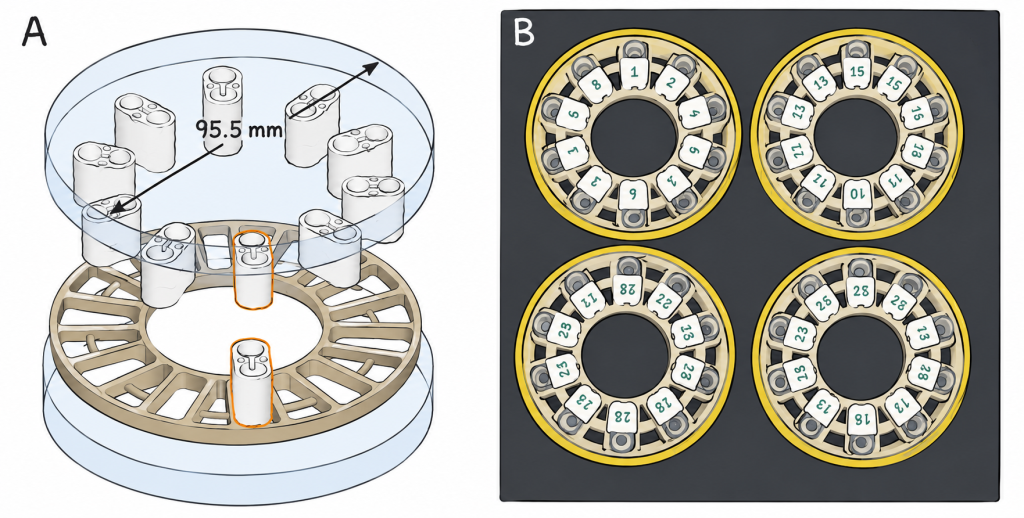
Researchers from Rothamsted Research together with international researchers from University of Neuchâtel, University of Minnesota, Los Alamos National Laboratory and Michigan State University have created innovative 3D‑printed experimental devices that allow them to observe, at scale, how bacteria disperse by travelling along fungal filaments – a phenomenon known as “fungal highways”.
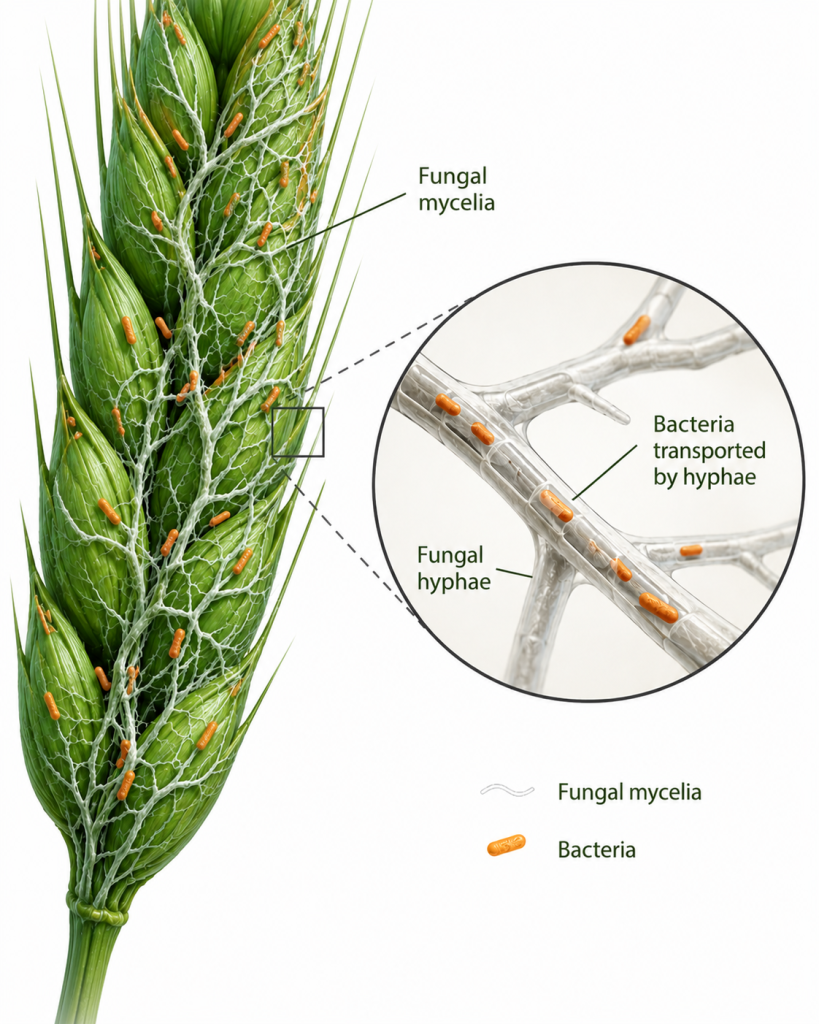
Fungi grow as long thread‑like networks (hyphae and mycelium) that explore their environment. These fungal networks can act as physical bridges across dry or fragmented habitats, enabling bacteria to move into new spaces they could not otherwise reach. Until now, studying these interactions has been technically challenging and hard to scale.
The new study, published in microLife, introduces simple, low‑cost devices that allow researchers to test many bacterial–fungal combinations under different environmental conditions at once. The approach provides a powerful new way to understand how microbial communities form and function in soil and on plants.
“We now have scalable methods to systematically study when, how and why bacteria move along fungal networks,” said Martin Darino, post-doctoral researcher at Rothamsted Research and co‑author of the study. “This helps us understand microbial behaviour in real environments, including fungal infection of plants rather than only under artificial laboratory conditions.”
From soil to crops
Using the new devices, the researchers showed that bacterial movement along fungal highways depends strongly on:
Under nutrient‑poor conditions, fungi became more exploratory, increasing the likelihood of bacterial transport.
Importantly, the team went beyond laboratory systems and demonstrated fungal‑mediated bacterial transport on wheat plants. The fungus Fusarium graminearum is the major causal agent in the UK and the world of Fusarium Head Blight disease on wheat. The fungus contaminates grain with harmful mycotoxins which makes them not suitable for human and animal consumption. The authors showed that F. graminearum hyphae were able to transport bacteria into neighbouring wheat tissues, suggesting a more intimate interaction, extending beyond co-migration into metabolic cooperation.
“Understanding these interactions matters because fungi and bacteria don’t act alone,” said Kim Hammond-Kosack, who leads the Wheat Pathogenomics team at Rothamsted Research. “These cross-kingdom cooperations are likely to influence fungal disease spread and virulence, microbial competition and ultimately how crops interact with their microbiome.”
Why fungal highways matter
Microbial interactions shape everything from nutrient cycling in soils to plant disease outcomes. Some bacteria that travel with fungi can enhance fungal virulence, while others may suppress disease or help plants tolerate other types of stresses.
The new tools providing a reproducible and adaptable way to study the roles of fungal bridges in a wide range of processes and will help researchers identify:
The 3-D printed devices are easy to customise and share, allowing laboratories worldwide to adopt the methods and explore fungal highways across agriculture, ecology and biotechnology.
“This opens the door to a more predictive understanding of microbial communities,” said co-author Pilar Junier from the University of Neuchâtel. “Once we understand the rules governing microbial movement, we can begin to manage or exploit these intricate relationships.”
“Microbial interactions play major roles in shaping ecosystems, but they are often difficult to study. By disentangling how microbes interact, we can better understand how microbial communities function,” said co-author Auréline Bouchard from the University of Neuchâtel. “Our 3D-printed device provides a simple and accessible way to study these interactions.”
The researchers say the next steps will involve combining the devices with real-time imaging and molecular tools to track microbes as they move. Ultimately, insights from this research could inform sustainable crop protection strategies and microbiome‑based solutions for agriculture under ever changing environmental conditions.
The research article was published in microLife: “Methods for evaluating bacterial dispersal on hyphal networks.”
The study involved collaborators from Switzerland, the UK and the USA.
The work was supported by the UK Biotechnology and Biological Sciences Research Council, the U.S. Department of Energy and the U.S. National Science Foundation.

POST-DOCTORAL RESEARCH SCIENTIST - MOLECULAR PLANT PATHOLOGY/PLANT BIOCHEMIST
Rothamsted Research is the longest-running agricultural research institute in the world. We work from gene to field with a proud history of ground-breaking
discoveries in areas as diverse as crop management, statistical interpretation and soil health. Our founders, in 1843, were the pioneers of modern
agriculture, and we are known for our imaginative science and our collaborative approach to developing innovative farm practice.
Through independent research, we make significant contributions to improving agri-food systems in the UK and internationally, with
economic impact estimated to exceed £3 bn in annual contribution to the UK economy. Our strength lies in our systems approach, which combines strategic research,
interdisciplinary teams and multiple partnerships.
Rothamsted is home to three unique National Bioscience Research Infrastructures which are open to researchers from all over the world:
The Long-Term Experiments,
Rothamsted Insect Survey and the
North Wyke Farm Platform.
We are strategically funded by the Biotechnology and Biological Sciences Research Council (BBSRC), with additional support from other national and
international funding streams, and from industry. We are also supported by the Lawes Agricultural Trust (LAT).
The Biotechnology and Biological Sciences Research Council is part of UK Research and Innovation, a non-departmental public body funded by a grant-in-aid
from the UK government.
BBSRC invests to push back the frontiers of biology and deliver a healthy, prosperous and sustainable future. Through our investments, we build and support a vibrant,
dynamic and inclusive community which delivers ground-breaking discoveries and develops bio-based solutions that contribute to tackling global challenges,
such as sustainable food production, climate change, and healthy ageing.
As part of UK Research and Innovation (UKRI), we not only play a pivotal role in fostering connections that enable the UK’s world-class research and innovation system
to flourish – we also have a responsibility to enable the creation of a research culture that is diverse, resilient, and engaged.
BBSRC proudly forges interdisciplinary collaborations where excellent bioscience has a fundamental role. We pioneer approaches that enhance the equality, diversity,
and inclusion of talent by investing in people, infrastructure, technologies, and partnerships on a global scale.
The Lawes Agricultural Trust, established in 1889 by Sir John Bennet Lawes, supports Rothamsted Research’s national and international agricultural science through the provision of land, facilities and funding. LAT, a charitable trust, owns the estates at Harpenden and Broom's Barn, including many of the buildings used by Rothamsted Research. LAT provides an annual research grant to the Director, accommodation for nearly 200 people, and support for fellowships for young scientists from developing countries. LAT also makes capital grants to help modernise facilities at Rothamsted, or invests in new buildings.