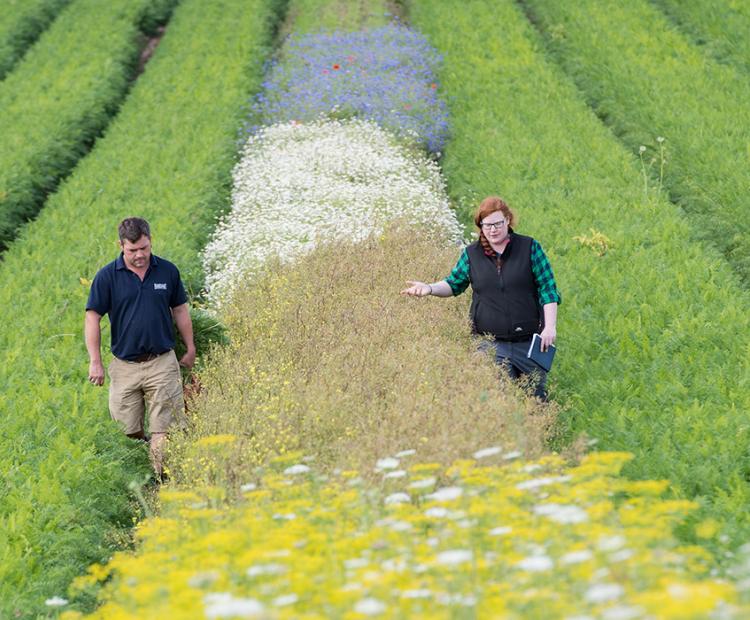
The big picture: using wildflower strips for pest control
They may be beautiful, but these strips prove pretty deadly for every farmer's mortal enemy: aphids
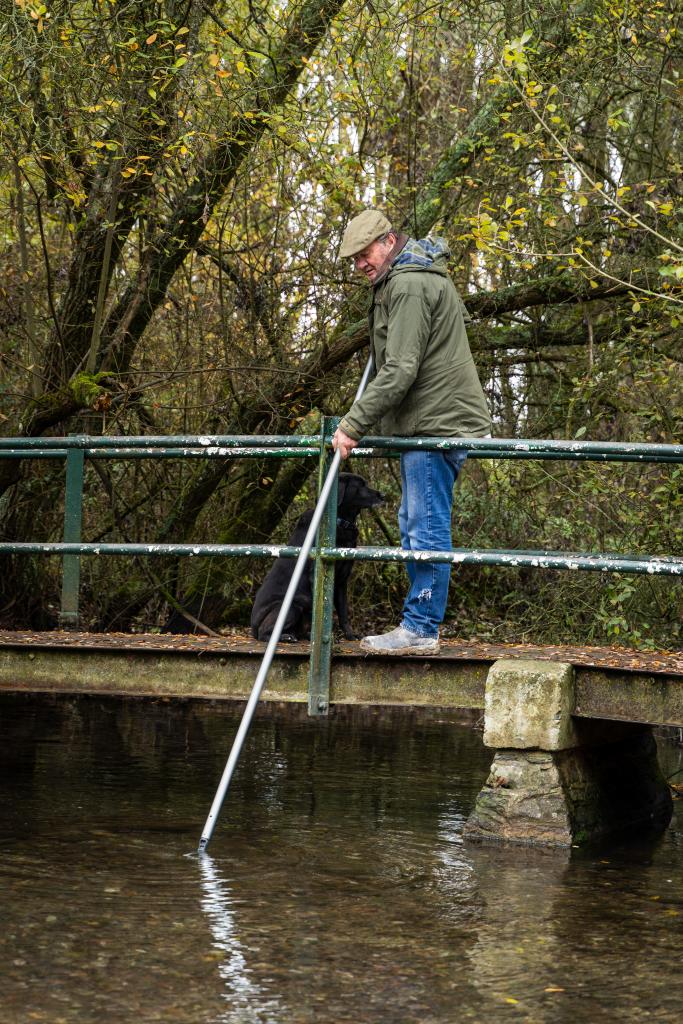
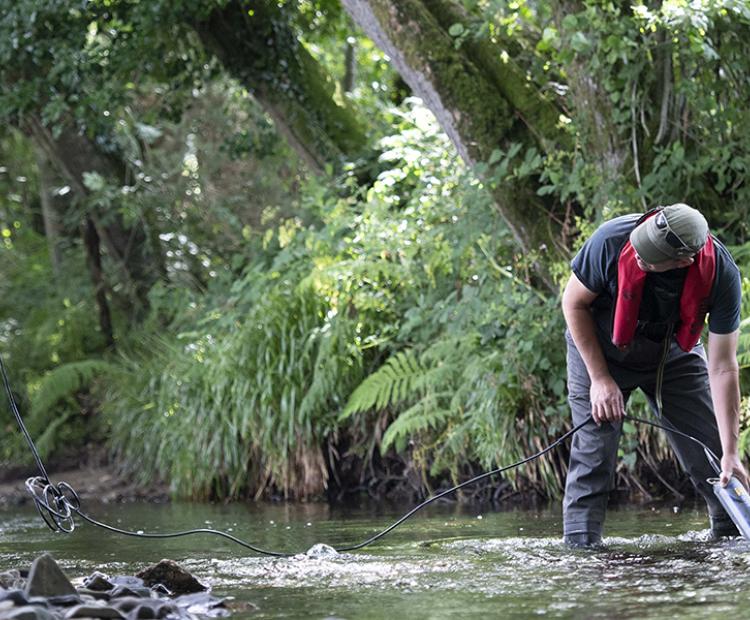
Farmers across the Hampshire Avon catchment are expanding their ability to track water quality, supported by tools and expertise developed at Rothamsted Research. A new on-farm laboratory on the Bourne—one of England’s best-known chalk streams—joins four existing sites established by the Evironmental Farmers Group (EFG), where farmers monitor nitrate, phosphate and sediment to understand how land management affects the river system.
We supplied the testing kit through the Resilient Farming Futures Institute Strategic Programme, funded by UKRI-BBSRC. Prof. Adie Collins, who leads the programme, said:
“This ground-breaking initiative empowers farmers to understand the pressures on their rivers and to take evidence-based action. By collecting data themselves, they can pinpoint likely pollution sources and put solutions in place where farming is a factor. We encourage more farming groups to adopt these low-tech, accessible methods to build long-term, locally driven evidence for action.”
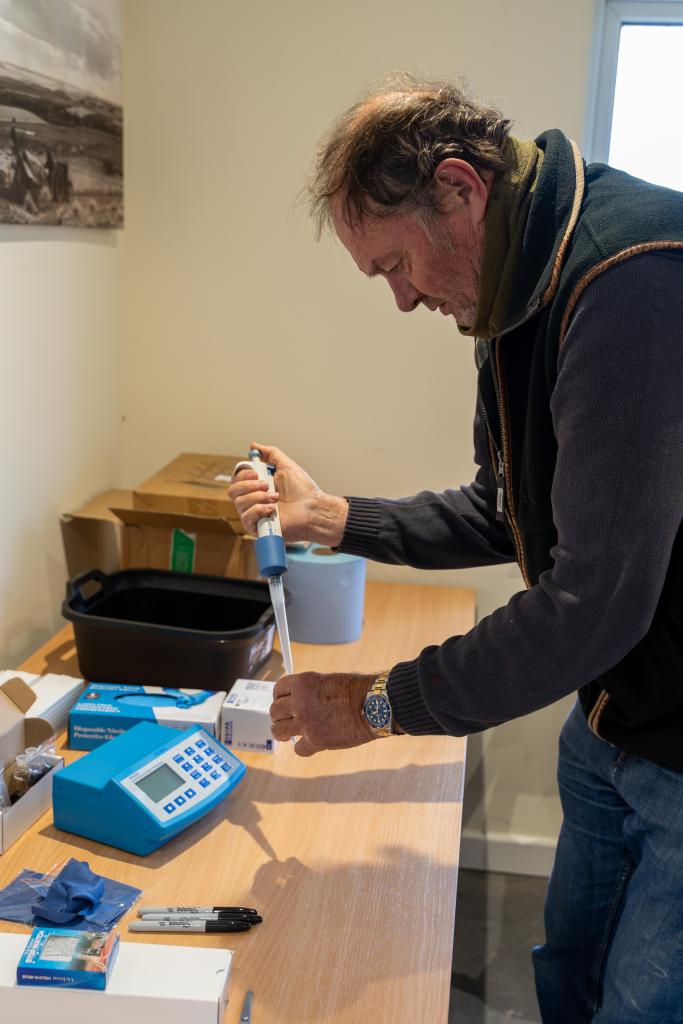
Training for the new Bourne lab was delivered by partners from the Game & Wildlife Conservation Trust and local ecologists already monitoring other Avon tributaries. Farmers receiving training on the Bourne emphasised the value of this approach. Philip Harvey and his son Joe run Manor Farm, where the lab is located. Philip said:
“We are delighted to be joining our fellow EFG members in starting to test water quality on the Hampshire Avon catchment. As farmers we are very conscious of the need to look after the environment, especially as we live and farm in the largest chalk stream catchment in England. It’s important to be able to distinguish the impact of farming practices on the river from other sources of pollution and like all farmers we are at the mercy of the weather, but we don’t want to see our precious soil ending up in the river and carrying phosphates with it. We have to use nitrate fertiliser to grow food to feed the nation, but we need to use it efficiently to cut costs and minimise run-off.”
Members of the Environmental Farmers Group have already generated more than two years of data from other sites, creating one of the most detailed farmer-led water quality datasets in the region. Their voluntary effort, equivalent to tens of thousands of pounds in annual monitoring, has become vital for improving the health of our rivers.
Looking ahead, EFG will run similar projects across the country, with a new water-testing lab set to open in North Lincolnshire in the New Year.

Science Director
Rothamsted Research is the longest-running agricultural research institute in the world. We work from gene to field with a proud history of ground-breaking
discoveries in areas as diverse as crop management, statistical interpretation and soil health. Our founders, in 1843, were the pioneers of modern
agriculture, and we are known for our imaginative science and our collaborative approach to developing innovative farm practice.
Through independent research, we make significant contributions to improving agri-food systems in the UK and internationally, with
economic impact estimated to exceed £3 bn in annual contribution to the UK economy. Our strength lies in our systems approach, which combines strategic research,
interdisciplinary teams and multiple partnerships.
Rothamsted is home to three unique National Bioscience Research Infrastructures which are open to researchers from all over the world:
The Long-Term Experiments,
Rothamsted Insect Survey and the
North Wyke Farm Platform.
We are strategically funded by the Biotechnology and Biological Sciences Research Council (BBSRC), with additional support from other national and
international funding streams, and from industry. We are also supported by the Lawes Agricultural Trust (LAT).
The Biotechnology and Biological Sciences Research Council is part of UK Research and Innovation, a non-departmental public body funded by a grant-in-aid
from the UK government.
BBSRC invests to push back the frontiers of biology and deliver a healthy, prosperous and sustainable future. Through our investments, we build and support a vibrant,
dynamic and inclusive community which delivers ground-breaking discoveries and develops bio-based solutions that contribute to tackling global challenges,
such as sustainable food production, climate change, and healthy ageing.
As part of UK Research and Innovation (UKRI), we not only play a pivotal role in fostering connections that enable the UK’s world-class research and innovation system
to flourish – we also have a responsibility to enable the creation of a research culture that is diverse, resilient, and engaged.
BBSRC proudly forges interdisciplinary collaborations where excellent bioscience has a fundamental role. We pioneer approaches that enhance the equality, diversity,
and inclusion of talent by investing in people, infrastructure, technologies, and partnerships on a global scale.
The Lawes Agricultural Trust, established in 1889 by Sir John Bennet Lawes, supports Rothamsted Research’s national and international agricultural science through the provision of land, facilities and funding. LAT, a charitable trust, owns the estates at Harpenden and Broom's Barn, including many of the buildings used by Rothamsted Research. LAT provides an annual research grant to the Director, accommodation for nearly 200 people, and support for fellowships for young scientists from developing countries. LAT also makes capital grants to help modernise facilities at Rothamsted, or invests in new buildings.