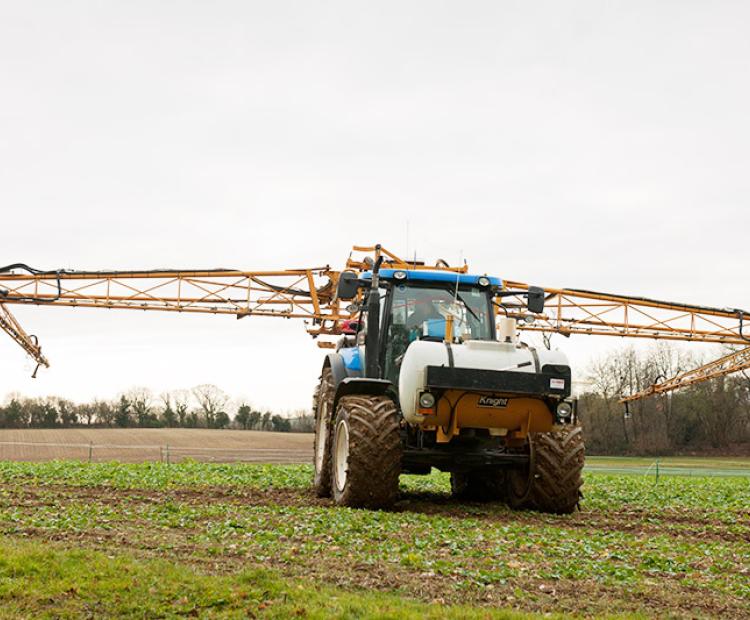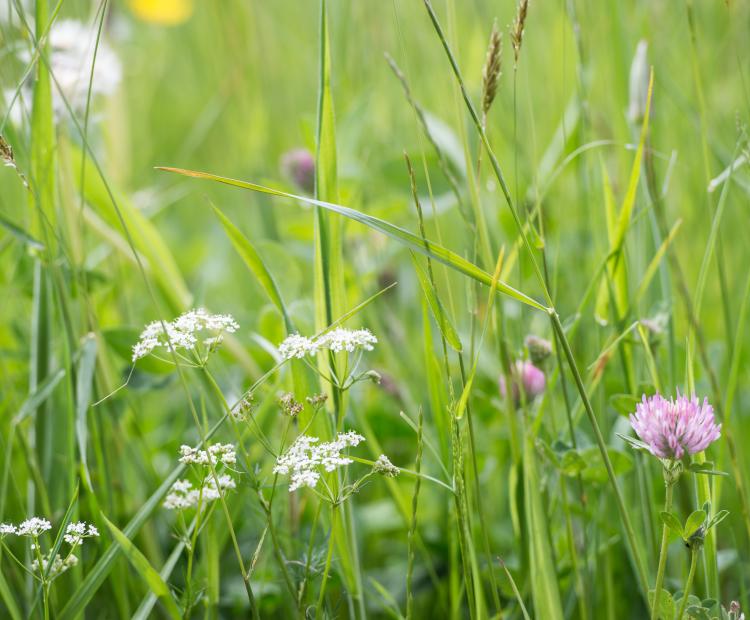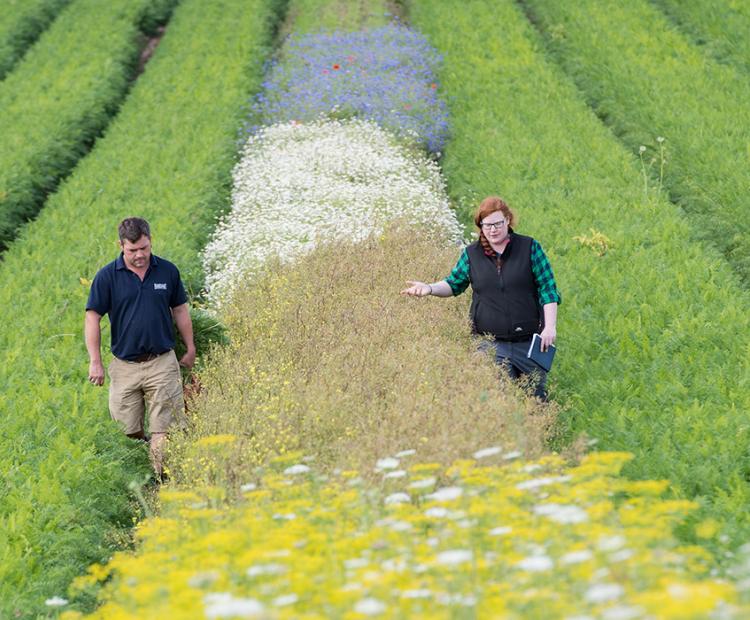
The big picture: using wildflower strips for pest control
They may be beautiful, but these strips prove pretty deadly for every farmer's mortal enemy: aphids
Scientists have discovered that chemicals produced by beetle larvae can directly stimulate harmful bacteria that damage oak trees, revealing a previously unknown mechanism driving tree disease.
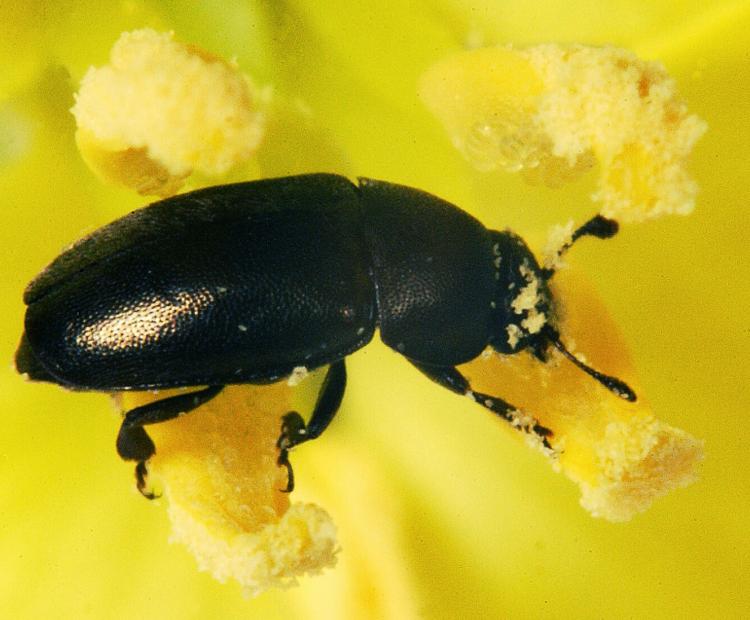
The research focuses on Acute Oak Decline (AOD), a serious condition threatening Britain’s native oaks characterised by dark, weeping lesions on tree trunks and the presence of larval galleries from the jewel beetle Agrilus biguttatus, whose larvae burrow through the tree’s inner bark, disrupting nutrient flow.
Previous research from Rothamsted has shown that AOD emits distinct odours that are highly attractive to the beetle, and now new research has shown that chemicals produced by the larvae make the bacterium Brenneria goodwinii, one of the key microbes responsible for AOD, into a pathogen.
Insect chemicals activate bacterial virulence
In controlled laboratory experiments, extracts taken from beetle larvae caused the bacteria to grow faster and reach higher population densities. The larval chemicals also triggered major changes in bacterial gene activity. However, this response did not occur when researchers tested extracts from oak wood damaged by the larvae, demonstrating that the bacteria are responding directly to chemicals produced by the insect larvae rather than to changes in the tree tissue.
“We found that chemicals produced by the beetle larvae effectively switch the bacteria into a more aggressive state,” said Dr Jozsef Vuts from Rothamsted, “this helps explain why bacterial damage becomes more severe when the larvae are present inside infected trees.”
Implications for managing tree diseases
The findings highlight the importance of multi-kingdom interactions in plant disease, where insects and microbes work together to worsen infection. “Plant diseases are rarely caused by a single organism,” added Dr John Caulfield from Rothamsted, “understanding how insects and microbes interact inside trees will be essential if we want to develop effective strategies to protect forests.”
As pest outbreaks and plant diseases increase worldwide, driven by global trade and environmental change, uncovering these hidden biological interactions will be critical for protecting trees and crop systems.

Chemical Ecologist

Analytical Chemist - Mass Spectrometist - Chemical Ecologist
Rothamsted Research is the longest-running agricultural research institute in the world. We work from gene to field with a proud history of ground-breaking
discoveries in areas as diverse as crop management, statistical interpretation and soil health. Our founders, in 1843, were the pioneers of modern
agriculture, and we are known for our imaginative science and our collaborative approach to developing innovative farm practice.
Through independent research, we make significant contributions to improving agri-food systems in the UK and internationally, with
economic impact estimated to exceed £3 bn in annual contribution to the UK economy. Our strength lies in our systems approach, which combines strategic research,
interdisciplinary teams and multiple partnerships.
Rothamsted is home to three unique National Bioscience Research Infrastructures which are open to researchers from all over the world:
The Long-Term Experiments,
Rothamsted Insect Survey and the
North Wyke Farm Platform.
We are strategically funded by the Biotechnology and Biological Sciences Research Council (BBSRC), with additional support from other national and
international funding streams, and from industry. We are also supported by the Lawes Agricultural Trust (LAT).
The Biotechnology and Biological Sciences Research Council is part of UK Research and Innovation, a non-departmental public body funded by a grant-in-aid
from the UK government.
BBSRC invests to push back the frontiers of biology and deliver a healthy, prosperous and sustainable future. Through our investments, we build and support a vibrant,
dynamic and inclusive community which delivers ground-breaking discoveries and develops bio-based solutions that contribute to tackling global challenges,
such as sustainable food production, climate change, and healthy ageing.
As part of UK Research and Innovation (UKRI), we not only play a pivotal role in fostering connections that enable the UK’s world-class research and innovation system
to flourish – we also have a responsibility to enable the creation of a research culture that is diverse, resilient, and engaged.
BBSRC proudly forges interdisciplinary collaborations where excellent bioscience has a fundamental role. We pioneer approaches that enhance the equality, diversity,
and inclusion of talent by investing in people, infrastructure, technologies, and partnerships on a global scale.
The Lawes Agricultural Trust, established in 1889 by Sir John Bennet Lawes, supports Rothamsted Research’s national and international agricultural science through the provision of land, facilities and funding. LAT, a charitable trust, owns the estates at Harpenden and Broom's Barn, including many of the buildings used by Rothamsted Research. LAT provides an annual research grant to the Director, accommodation for nearly 200 people, and support for fellowships for young scientists from developing countries. LAT also makes capital grants to help modernise facilities at Rothamsted, or invests in new buildings.