The big picture: using wildflower strips for pest control
They may be beautiful, but these strips prove pretty deadly for every farmer's mortal enemy: aphids
We're pleased to have been part of yesterday's launch of the State of Agricultural Research & Innovation (SARI) Report, which maps £1.2bn of public funding for UK agricultural research and compares it with the priorities of more than 600 stakeholders across farming, research and industry.
We're delighted that our Director, Professor Martin Broadley, contributed to the discussion on how the UK can strengthen the impact and social value of agricultural research.
Professor Martin Broadley said:
"At Rothamsted Research, we're committed to delivering world-leading science that helps address the challenges facing agriculture today, from food security and productivity to environmental sustainability and climate resilience.
The SARI report's findings align closely with our strengths: long-term science, on-farm platforms, research infrastructure, farmer engagement, and national coordination. We are pleased to see the report explicitly cites our Long-Term Experiments and North Wyke Farm Platform as positive examples of UK strengths in research infrastructure."
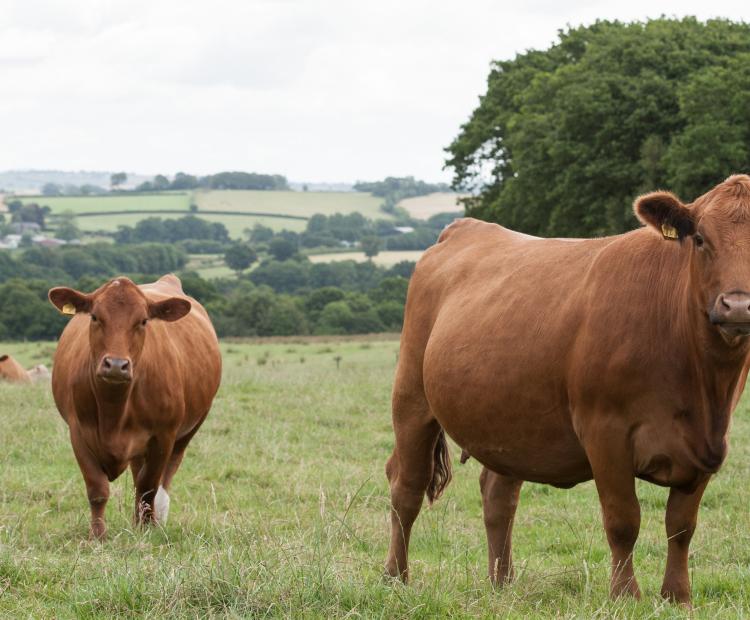
Founded nearly two centuries ago, Rothamsted's Long-Term Experiments continue to generate insights into crop production, soil health and climate resilience, while the North Wyke Farm Platform combines long-term environmental monitoring with the flexibility to address emerging agricultural challenges under real-world farming conditions.
Here’s how we’re addressing farmer and researcher expectations of agricultural research highlighted in the report:
Relevant
The report highlights that research must address the real-world challenges facing agriculture. Our North Wyke Farm Platform was designed to provide both long-term monitoring of different farming systems and stay flexible to address emerging research questions in agriculture. Conducting research under real-world farming conditions, means our open-access farm data is especially relevant and useful to the wider farming community.
Joined-up
The report calls for greater coordination across the agricultural research and innovation landscape. Rothamsted Research is committed to working across disciplines and sectors to ensure scientific advances translate into real-world outcomes.
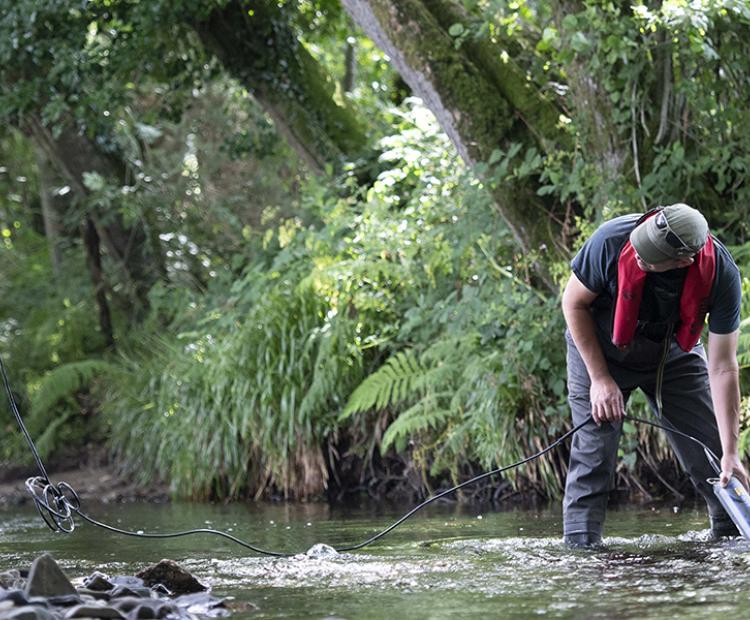
A recent example is the development of a low-cost forensic method developed by Rothamsted Research to track sediment pollution which has been adopted by the Environment Agency as a standard national monitoring procedure, marking a significant step forward in protecting water quality and managing agricultural landscapes. Our science is generating robust methods that can be adopted by both national agencies and citizen scientists.
Rothamsted is also a member of the National Research Organisation (NRO) Group, which brings together more than 100 leaders from government, research, academia, industry and funding organisations to strengthen collaboration and maximise the impact of science for society and the environment.
Useful
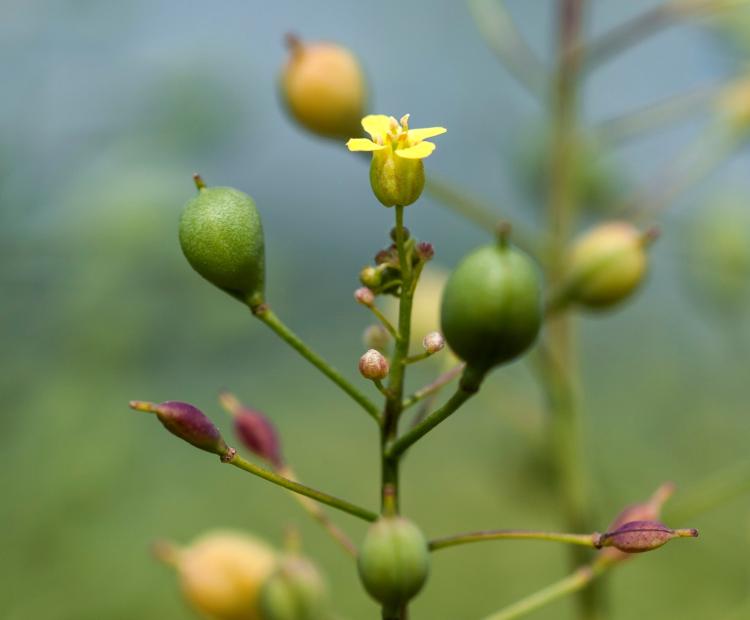
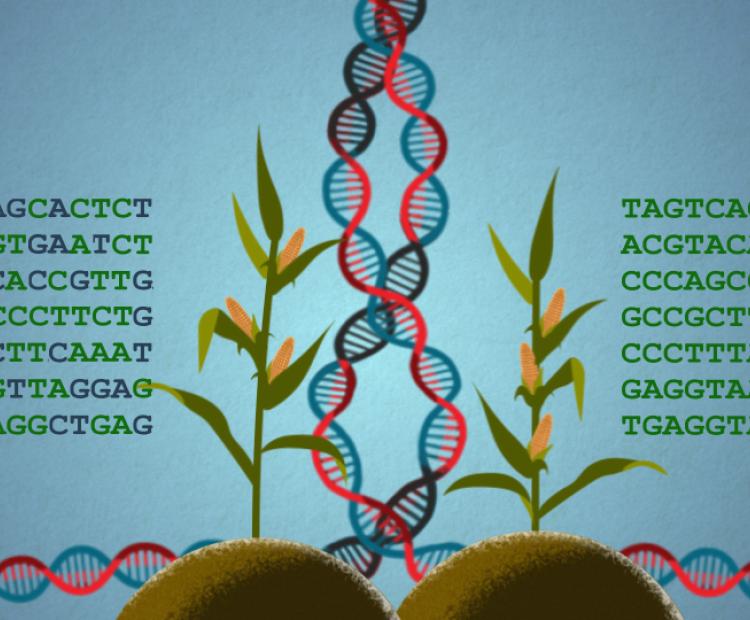
Stakeholders want research that translates into tangible benefits. Using gene-editing, we are developing new varieties of camelina, an oilseed crop, designed to enhance yields for UK farmers. The new UK regulatory framework has allowed us to conduct field trials to better understand how these innovations can support farmers in the future.
Similarly, a gene-edited barley has been developed using CRISPR gene editing to increase lipid content in plant tissues, creating a high-energy forage crop for ruminant livestock, and has the potential to reduce methane emissions produced during digestion. New UK regulations allow the crop to progress towards wider evaluation (research and analysis) and eventual commercial deployment of the trait.
Grounded
The report highlights the importance of farmer involvement in shaping research priorities. At Rothamsted we work closely with farmers, agronomists/advisors, and industry partners through co-design workshops, stakeholder events and collaborative innovation programmes to ensure research remains relevant and practical. A recent example is Rothamsted's participation in ADOPT (Accelerating Development of Practices and Technologies) projects, which support farmer-led innovation and on-farm trials. By working directly with farmers to test and evaluate new approaches under real-world conditions, the programme helps ensure that research is informed by practical experience, strengthens the connection between scientific discovery and on-farm decision-making, and provides a clear pathway to adoption and impact.
Timely
Research must provide solutions when they are needed. Our real-time insect data from the Rothamsted Insect Survey allows us to observe pest threats early and alert farmers so that they can respond rapidly and proportionally to protect food security. Although this is a long-term capability, running since 1964, the impact is immediate.
Future-proof
Preparing agriculture for future challenges requires long-term thinking. Modelling plays a key role in anticipating future challenges to agriculture and guiding how we should react to them. Recent research from Rothamsted showed that the ability to slow or contain the spread of the invasive emerald ash borer, a threat to ash trees, will depend on the responses of land managers across Great Britain.
Another study used advanced climate projections and the Sirius wheat model to estimate how short, intense heatwaves and droughts during flowering could affect global wheat yields in the future. The results show a clear shift in risk - drought during flowering currently causes more yield loss than heat. By 2050, global yield losses linked to extreme heat at flowering could rise by about one-third. By 2090, those losses could increase by more than three-quarters.
Read the full SARI report and explore the interactive dashboard.
Rothamsted Research is the longest-running agricultural research institute in the world. We work from gene to field with a proud history of ground-breaking
discoveries in areas as diverse as crop management, statistical interpretation and soil health. Our founders, in 1843, were the pioneers of modern
agriculture, and we are known for our imaginative science and our collaborative approach to developing innovative farm practice.
Through independent research, we make significant contributions to improving agri-food systems in the UK and internationally, with
economic impact estimated to exceed £3 bn in annual contribution to the UK economy. Our strength lies in our systems approach, which combines strategic research,
interdisciplinary teams and multiple partnerships.
Rothamsted is home to three unique National Bioscience Research Infrastructures which are open to researchers from all over the world:
The Long-Term Experiments,
Rothamsted Insect Survey and the
North Wyke Farm Platform.
We are strategically funded by the Biotechnology and Biological Sciences Research Council (BBSRC), with additional support from other national and
international funding streams, and from industry. We are also supported by the Lawes Agricultural Trust (LAT).
The Biotechnology and Biological Sciences Research Council is part of UK Research and Innovation, a non-departmental public body funded by a grant-in-aid
from the UK government.
BBSRC invests to push back the frontiers of biology and deliver a healthy, prosperous and sustainable future. Through our investments, we build and support a vibrant,
dynamic and inclusive community which delivers ground-breaking discoveries and develops bio-based solutions that contribute to tackling global challenges,
such as sustainable food production, climate change, and healthy ageing.
As part of UK Research and Innovation (UKRI), we not only play a pivotal role in fostering connections that enable the UK’s world-class research and innovation system
to flourish – we also have a responsibility to enable the creation of a research culture that is diverse, resilient, and engaged.
BBSRC proudly forges interdisciplinary collaborations where excellent bioscience has a fundamental role. We pioneer approaches that enhance the equality, diversity,
and inclusion of talent by investing in people, infrastructure, technologies, and partnerships on a global scale.
The Lawes Agricultural Trust, established in 1889 by Sir John Bennet Lawes, supports Rothamsted Research’s national and international agricultural science through the provision of land, facilities and funding. LAT, a charitable trust, owns the estates at Harpenden and Broom's Barn, including many of the buildings used by Rothamsted Research. LAT provides an annual research grant to the Director, accommodation for nearly 200 people, and support for fellowships for young scientists from developing countries. LAT also makes capital grants to help modernise facilities at Rothamsted, or invests in new buildings.