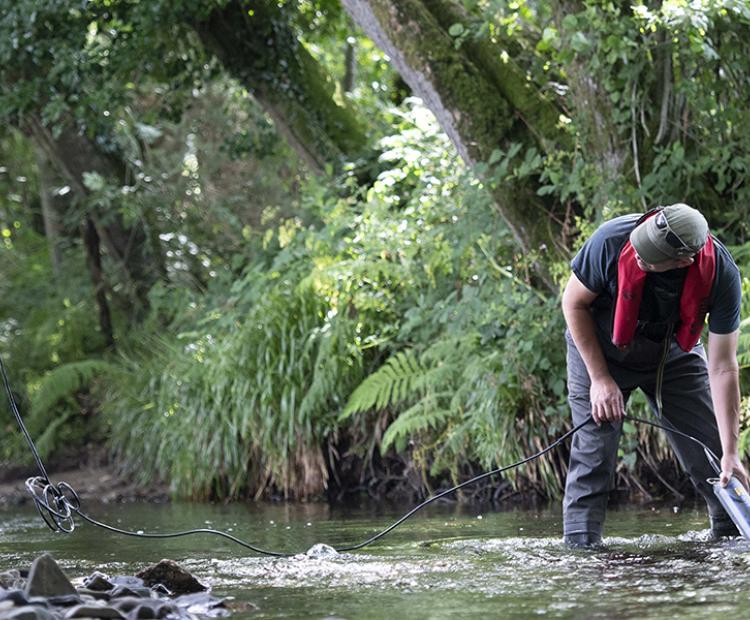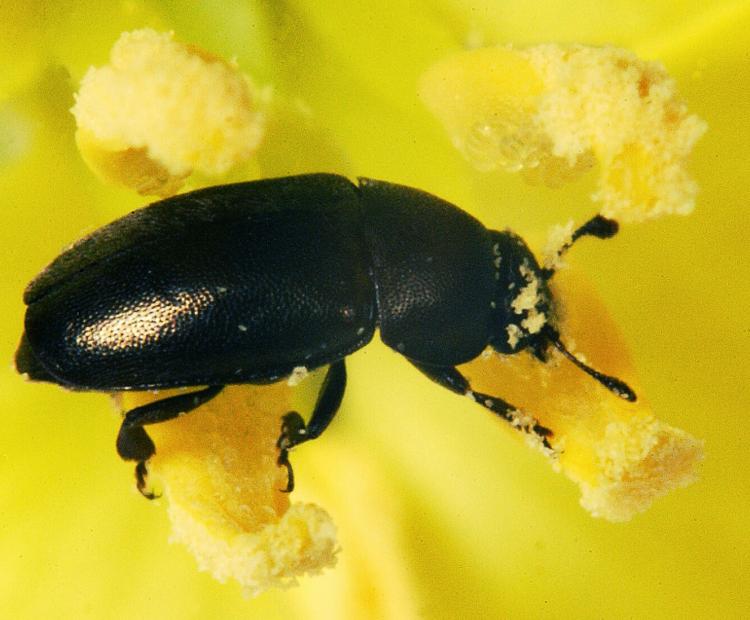
The big picture: using wildflower strips for pest control
They may be beautiful, but these strips prove pretty deadly for every farmer's mortal enemy: aphids

Multiple factors, including climatic, environmental, legislative and societal changes, have led to the evolution of problematic plant pathogens that are collectively responsible for annual losses of ~15% of total crop yield globally and are a serious threat to global food security. Major threats to wheat, Europe’s most important crop, include the head blight fungus F. graminearum (Fg; www.scabusa.org) (Fig.1(a)) and Zymoseptoria tritici (Zt; Figueroa et al.,2018). Understanding how filamentous fungal pathogens colonise wheat host tissue is essential for identifying effective control mechanisms.
The main scientific aim of this PhD project is to investigate both the cellular and molecular signalling mechanisms required for Fg hyphae to traverse through the plasmodesmata-containing pit fields of plant cell walls (Fig. 1(b&c)); a crucial phase in the Fg infection process (Brown et al.,2010; Brown et al.,2017; Armer et al.,2024). Zt will be used in this project as a comparator phytopathogen. The student will learn how to use a range of existing tools (fungal reporter and singe gene deletion strains), established techniques (dual wheat-Fg/ZtRNA-seq analyses, light/confocal microscopy) and emerging technologies (microfluidics; two-photon 3D printing). The student will also be trained to quantify and mathematically model the in vitro growth of Fg strains in microfluidic devices and in vivo data from Fg wheat image datasets acquired from detailed microscopy studies.
The student will undertake a rotation research project at Rothamsted Research (RRes; for 0.5 years) then a second rotation project and first half of the main project at the University of Exeter (1.5 years at Exeter). This is a unique opportunity for a PhD student to learn valuable phytopathology techniques at the world-leading RRes institute, followed by the mastering of specialist skills in microfluidics, bioimaging and mathematical modelling approaches at Exeter. The student will then return to RRes for the final half of the main research project to test on wheat hosts the concepts and phenotypes discovered through microfluidics. An SWBio-funded industrial placement will bridge the Exeter and RRes sections of the main project. The student will have access to world class research facilities throughout and will receive outstanding interdisciplinary training in microfabrication and mathematical modelling. The student will also receive training in how to give oral/poster presentations at laboratory meetings, workshops, national/international conferences, write a scientific paper for peer review and will take part in outreach events, for example The British Festival of Science
Eligibility
To be eligible for a fully-funded studentship, you must meet the below academic and residence criteria.
Applicants for a studentship must have obtained, or be about to obtain, a First or Upper Second Class UK Honours degree, or the equivalent qualifications gained outside the UK, in an appropriate area of science or technology. Applicants with a Lower Second Class degree will be considered if they also have a Master’s degree or have significant relevant research or non-academic experience.
In addition, due to the strong quantitative component of the taught course in the first year and the quantitative emphasis in our projects, quantitative experience is needed. We recognise this can be demonstrated through a number of options, and have included some examples below (this is not an exhaustive list):
*Significant quantitative component examples include statistics, bioinformatics, maths, physics, data analysis, computation.
Of note: a limited number of our PhD projects may have a greater quantitative emphasis and require advanced quantitative experience. These expectations will be outlined by the PhD project supervisor.
Applicants must ensure they highlight their quantitative background within their application (i.e. the quantitative techniques used and how applied).
To support accessibility to PhD training opportunities, these studentships are only available to applicants that have not previously obtained or about to obtain a PhD degree (or equivalent).
If your first language is not English, you will need to meet the minimum English requirements for the programme. Further information about these English requirements >>
We ask that the language requirements are met by 1st June at the latest, to allow adequate time to obtain any necessary documentation to allow you to study in the UK. Further information about documentation required >>
IMPORTANT: Residency requirements are complex and too detailed to capture in full below. So please read alongside guidance provided on the GOV.UK website and UKCISA website to ensure you meet the criteria.
Home students
Fully-funded studentships are available for Home students. To be classed as a Home student, candidates must meet the following criteria:
International students
If you do not meet the above criteria, you will be classed as an International student.
A limited number (up to 30%) of UKRI fully-funded studentships are available through the SWBio DTP, that applicants who would be classed as an International student are eligible for. This also means that there are normally no restrictions on applying to any project that is advertised (unless otherwise indicated). Please apply through our normal application route.
Note: A UKRI fully-funded studentship will only cover what is listed under the ‘UKRI-BBSRC funded studentship‘ section. However there may be other costs that you may encounter and need to take into consideration which will not be covered by the studentship. For example, visa fees, healthcare surcharge and relocation costs .
Projects advertised during the main SWBio DTP recruitment period (this period will be indicated by an application deadline) are all 4 years fully-funded (subject to being made a studentship offer following the SWBio interview day).
A fully-funded four year SWBio DTP studentship will cover:
A limited number (up to 30%) of UKRI fully-funded studentships are available through the SWBio DTP, that applicants who would be classed as an International student are eligible for. This also means that there are normally no restrictions on applying to any project that is advertised (unless otherwise indicated). Further information about residence criteria
* An enhanced stipend is available for students with a recognised veterinary degree qualification. There may also be enhanced stipends associated with projects that have a CASE partner (CASE projects are highlighted as *CASE in the project lists).
** International students will not be required to cover the difference between home and international tuition fees.
Please visit Funding – SWBiosciences Doctoral Training Partnership for further details on stipends and further details for international students.
For further details on how to apply for this studentship project, please visit the SWBio web pages.