The big picture: using wildflower strips for pest control
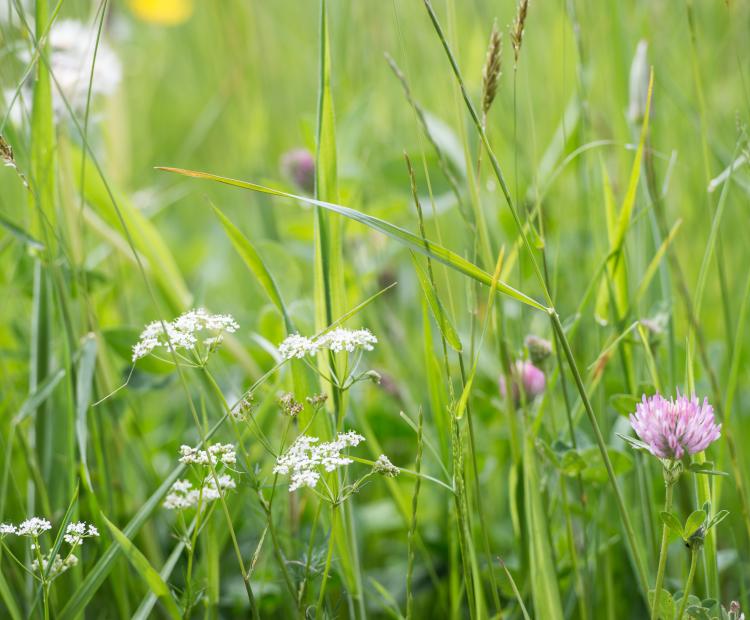
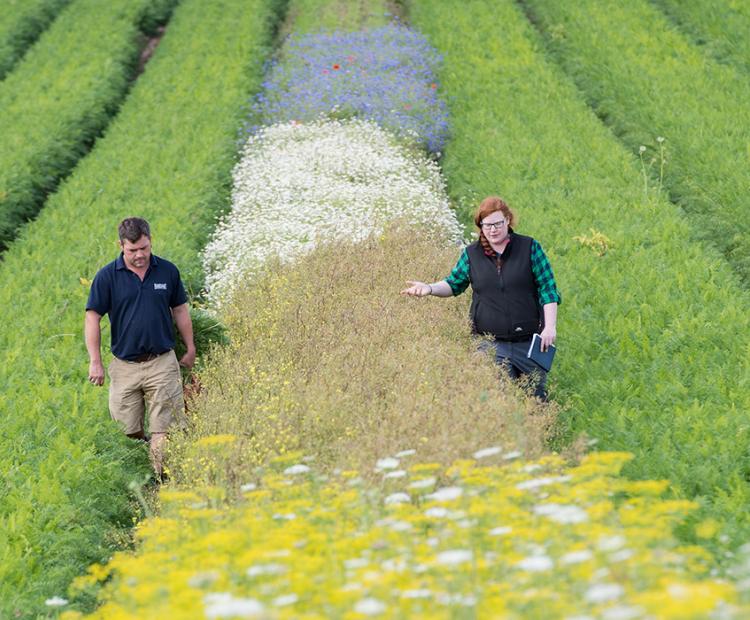
They may be beautiful, but these strips prove pretty deadly for every farmer's mortal enemy: aphids
This project is part of the ARIES DTP and the successful candidate will be predominantly based at the Earlham Institute and registered at University of East Anglia.
Unimproved, sensitively grazed lowland grasslands are an ecologically vital but highly threatened habitat. These grasslands support diverse fungal communities, from the iconic and vulnerable waxcaps to a vast, poorly understood diversity of soil microfungi that underpin plant health, nutrient cycling, and carbon storage.
A key determinant of fungal community recovery is time since last disturbance (e.g. ploughing), because fungi rely on slow-growing, undisturbed hyphal networks. Understanding how long recovery takes, and what drives it, is essential for informing grassland restoration and sustainable land management policy.
This project will use three UK grassland sites in Norfolk, Hertfordshire and Devon that span soil type, climate, and documented management history. In these fields you will sample soils along a gradient of time-since-disturbance at each site and use metabarcoding sequencing to characterise fungal diversity and community composition.
Collecting soil chemistry data alongside will help disentangle the effects of disturbance history from other environmental drivers. In parallel, sequencing of bacteria from the same samples will allow the comparison of relative impacts of disturbance on fungi versus bacteria.
Finally, informed by emerging results, you will identify a focal shared grass species present across all sites to sample at finer resolution (roots, rhizosphere, bulk soil) to determine whether recruitment of fungal partners is consistent across sites.
The integration of field, laboratory and bioinformatics training delivered by this project offers an exciting opportunity to develop a diverse transferable skillset of high value in both academia and industry.
The project will be based at the Earlham Institute, a world-class BBSRC research centre of excellence in genomics, engineering and computational biology, and AI, in collaboration with the long-term experiment sites, datasets, and expertise at Rothamsted Research.
This project suits someone with a degree in ecology, microbiology, environmental science, or related field, and enthusiasm for field, lab and computational work.
At least UK equivalence Bachelors (Honours) 2:1. English Language requirement (Faculty of Science equivalent: IELTS 6.5 overall, 6 in each category).
ARIES studentships are subject to UKRI terms and conditions. Successful candidates who meet UKRI’s eligibility criteria will be awarded a fully-funded studentship, which covers fees, maintenance stipend (£21,805 p.a. for 2026/27) and a research training and support grant (RTSG). A limited number of studentships are available for international applicants, with the difference between 'home' and 'international' fees being waived by the registering university. Please note, however, that ARIES funding does not cover additional costs associated with relocation to, and living in, the UK, such as visa costs or the health surcharge.
ARIES is committed to equality, diversity, widening participation and inclusion in all areas of its operation. We encourage applications from all sections of the community regardless of gender, ethnicity, disability, age, sexual orientation and transgender status. Projects have been developed with consideration of a safe, inclusive and appropriate research and fieldwork environment. Academic qualifications are considered alongside non-academic experience, with equal weighting given to experience and potential.
After submitting their application for the relevant ARIES project(s), applicants are expected to complete the ARIES Equality and Diversity Form Applicants - 2027 Entry – Fill in form. One form is required per application, so applicants applying to more than one project must complete a separate form for each.
Please visit www.aries-dtp.ac.uk for further information.
For further details on this project and how to apply, please click here.