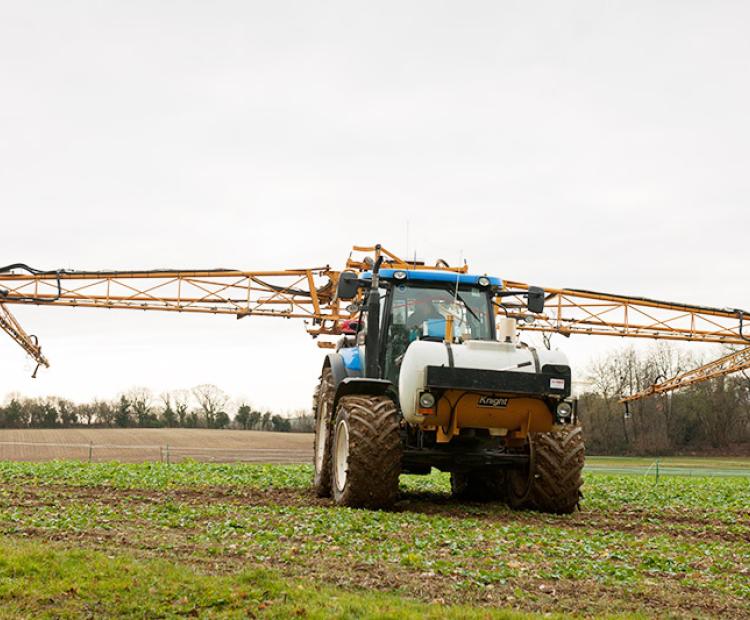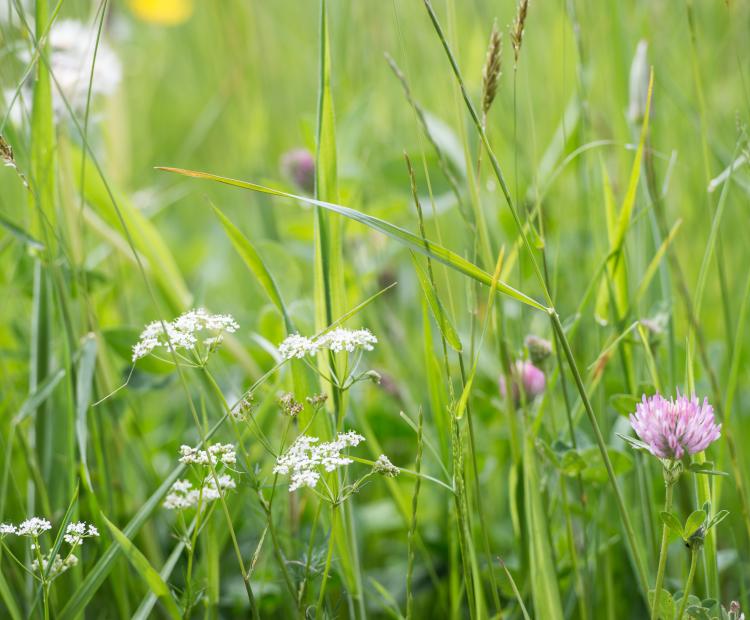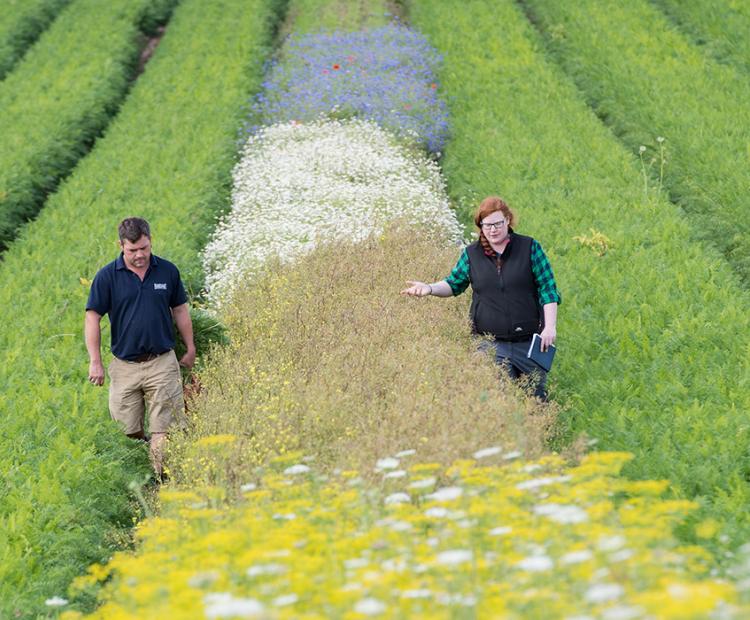
The big picture: using wildflower strips for pest control
They may be beautiful, but these strips prove pretty deadly for every farmer's mortal enemy: aphids
Agriotes spp. wireworms (Coleoptera: Elateridae) are major pests of cereal crops and root vegetables in Europe and North America. Seed treatment applications and other contact insecticides are used to protect crops from larval feeding damage. However, current chemical options are challenged in Europe because of concerns about their environmental toxicity, and it is very questionable when and if at all a new soil insecticide could be registered for wireworm management. Biologicals, such as natural products and microbes, act in a non-toxic mode of action and can provide an environmentally benign alternative for soil pest management. Similar to aboveground insects, soil dwelling arthropods are also attracted to volatile natural products, and certain microbes (bacteria, fungi etc.) can naturally eliminate them, but the chance of successful infection in the vast soil matrix is slim.
This project will develop an attract-and-suppress platform, building on an attractive blend we developed for wireworms. Identifying a suppressant for wireworms is a major aim of the project. Candidate soil bacteria in the UK Crop Microbiome Cryobank will be screened for their ability to infect and destroy wireworms. We will also test entomopathogenic fungi for their effect on wireworms. Promising microbial candidates will then be formulated with the attractant and tested in comparative experiments in laboratory and semi-field environments, that will also provide an understanding of volatile diffusion in soil. The wireworms will be collected from agricultural land, so the project work includes some travel across the UK. As this is a CASE studentship, you will have the opportunity to spend three months with the industry partner, PheroSyn, where you will learn a great deal about formulation science and commercial applications.
You will be part of a collaborative team and benefit from tailored mentorship and professional development opportunities. The project provides a balanced blend of conceptual learning, hands-on experimentation, data analysis and professional development. You can expect structured, supportive supervision with a blend of independence and guidance appropriate for a PhD-level training environment. Regular supervisory meetings will review progress, troubleshoot challenges and plan subsequent work. Day-to-day support will be available from the supervisors, particularly during initial training phases. As you develop competence and confidence, you will be encouraged to take increasing ownership of experimental design, data interpretation and project direction. Whether your interests lie in microbiology, chemical ecology or sustainable agriculture, this project will give you new and applicable skills essential for success in research and innovation.
Eligibility
To be eligible for a fully-funded studentship, you must meet the below academic and residence criteria.
Applicants for a studentship must have obtained, or be about to obtain, a First or Upper Second Class UK Honours degree, or the equivalent qualifications gained outside the UK, in an appropriate area of science or technology. Applicants with a Lower Second Class degree will be considered if they also have a Master’s degree or have significant relevant research or non-academic experience.
In addition, due to the strong quantitative component of the taught course in the first year and the quantitative emphasis in our projects, quantitative experience is needed. We recognise this can be demonstrated through a number of options, and have included some examples below (this is not an exhaustive list):
*Significant quantitative component examples include statistics, bioinformatics, maths, physics, data analysis, computation.
Of note: a limited number of our PhD projects may have a greater quantitative emphasis and require advanced quantitative experience. These expectations will be outlined by the PhD project supervisor.
Applicants must ensure they highlight their quantitative background within their application (i.e. the quantitative techniques used and how applied).
To support accessibility to PhD training opportunities, these studentships are only available to applicants that have not previously obtained or about to obtain a PhD degree (or equivalent).
If your first language is not English, you will need to meet the minimum English requirements for the programme. Further information about these English requirements >>
We ask that the language requirements are met by 1st June at the latest, to allow adequate time to obtain any necessary documentation to allow you to study in the UK. Further information about documentation required >>
IMPORTANT: Residency requirements are complex and too detailed to capture in full below. So please read alongside guidance provided on the GOV.UK website and UKCISA website to ensure you meet the criteria.
Home students
Fully-funded studentships are available for Home students. To be classed as a Home student, candidates must meet the following criteria:
International students
If you do not meet the above criteria, you will be classed as an International student.
A limited number (up to 30%) of UKRI fully-funded studentships are available through the SWBio DTP, that applicants who would be classed as an International student are eligible for. This also means that there are normally no restrictions on applying to any project that is advertised (unless otherwise indicated). Please apply through our normal application route.
Note: A UKRI fully-funded studentship will only cover what is listed under the ‘UKRI-BBSRC funded studentship‘ section. However there may be other costs that you may encounter and need to take into consideration which will not be covered by the studentship. For example, visa fees, healthcare surcharge and relocation costs .
UKRI-BBSRC funded studentship
Projects advertised during the main SWBio DTP recruitment period (this period will be indicated by an application deadline) are all 4 years fully-funded (subject to being made a studentship offer following the SWBio interview day).
A fully-funded four year SWBio DTP studentship will cover:
A limited number (up to 30%) of UKRI fully-funded studentships are available through the SWBio DTP, that applicants who would be classed as an International student are eligible for. This also means that there are normally no restrictions on applying to any project that is advertised (unless otherwise indicated). Further information about residence criteria
* An enhanced stipend is available for students with a recognised veterinary degree qualification. There may also be enhanced stipends associated with projects that have a CASE partner (CASE projects are highlighted as *CASE in the project lists).
** International students will not be required to cover the difference between home and international tuition fees.
Please visit Funding – SWBiosciences Doctoral Training Partnership for further details on stipends and further details for international students.
For further details on how to apply for this studentship project, please visit the SWBio web pages.