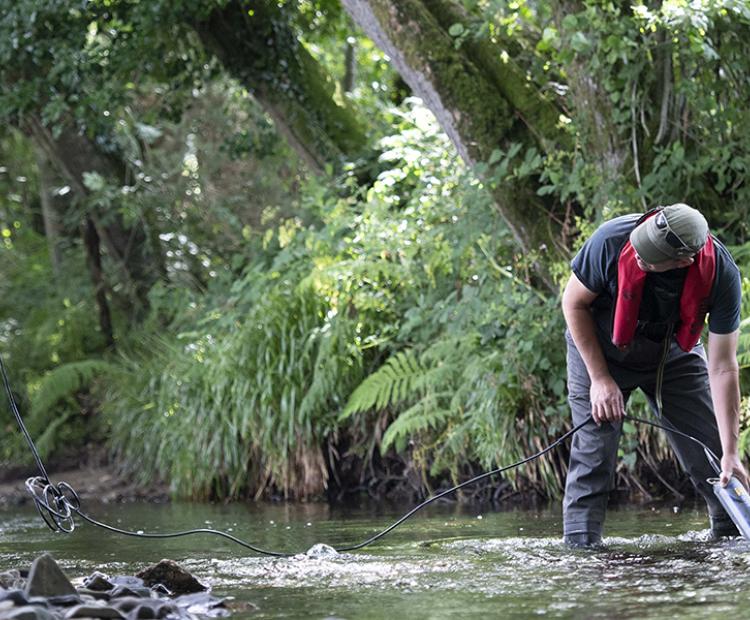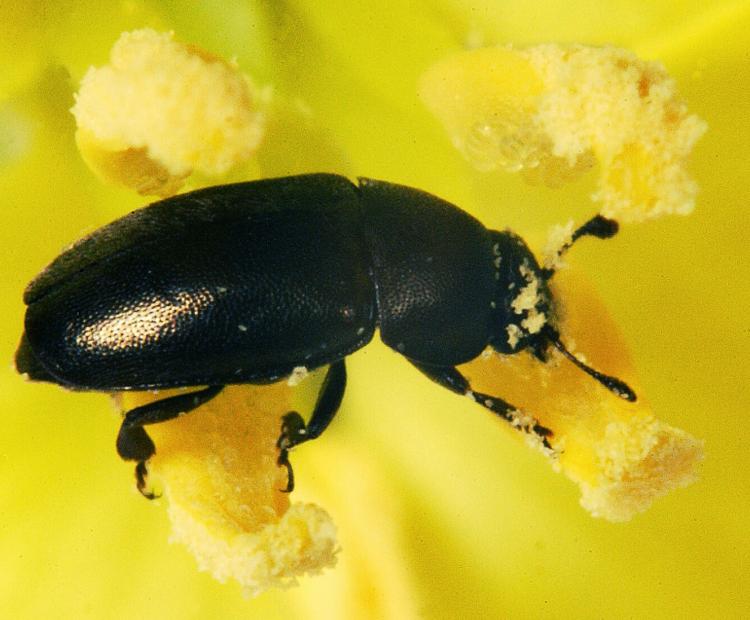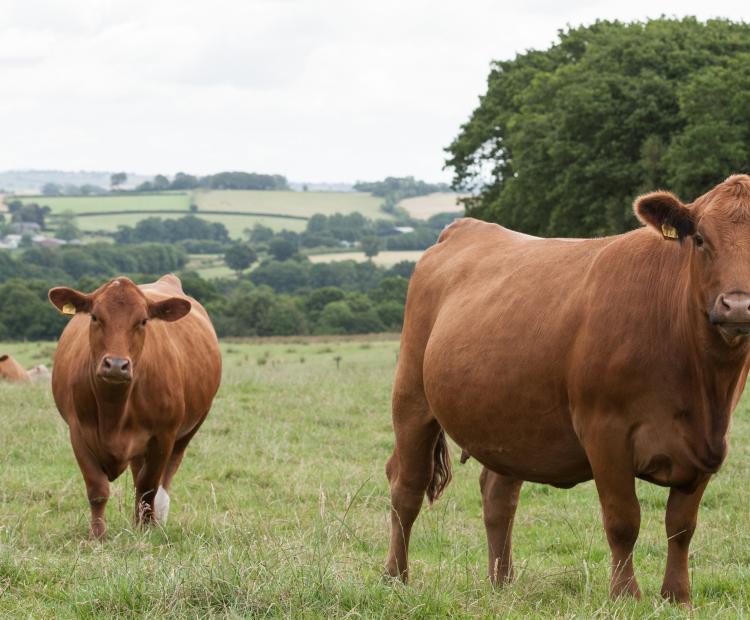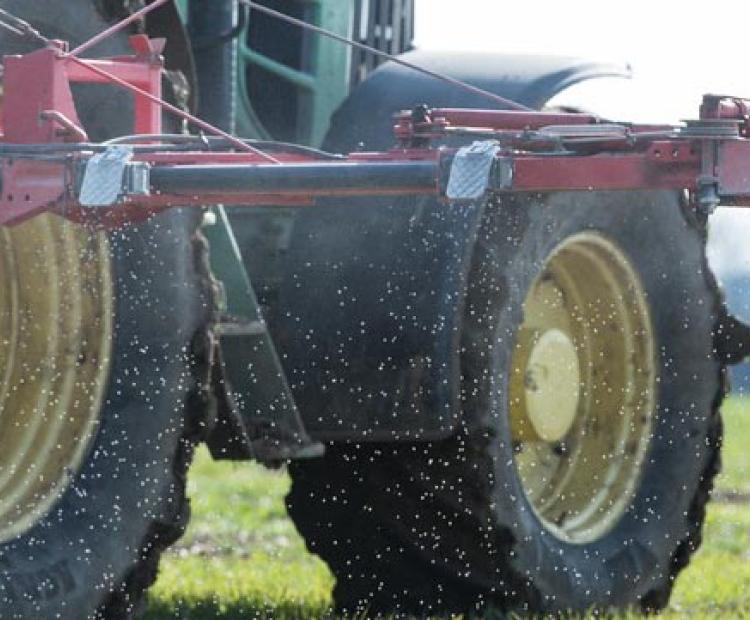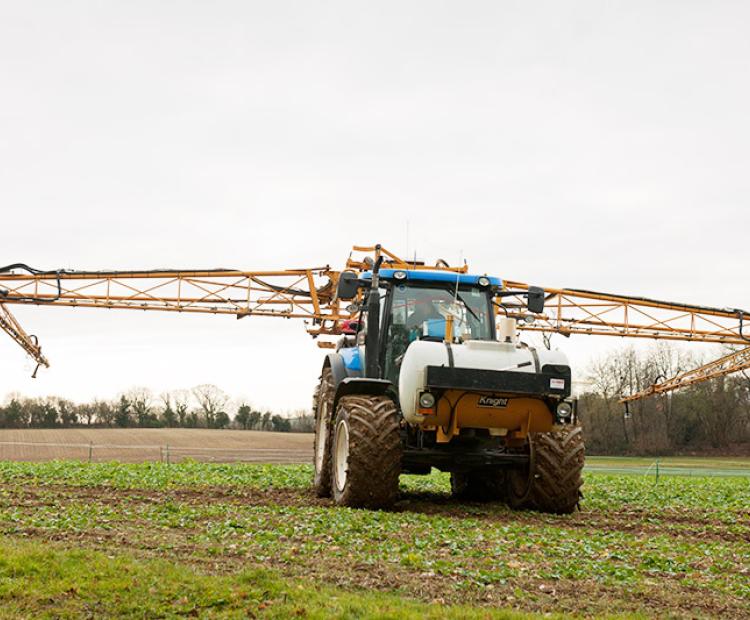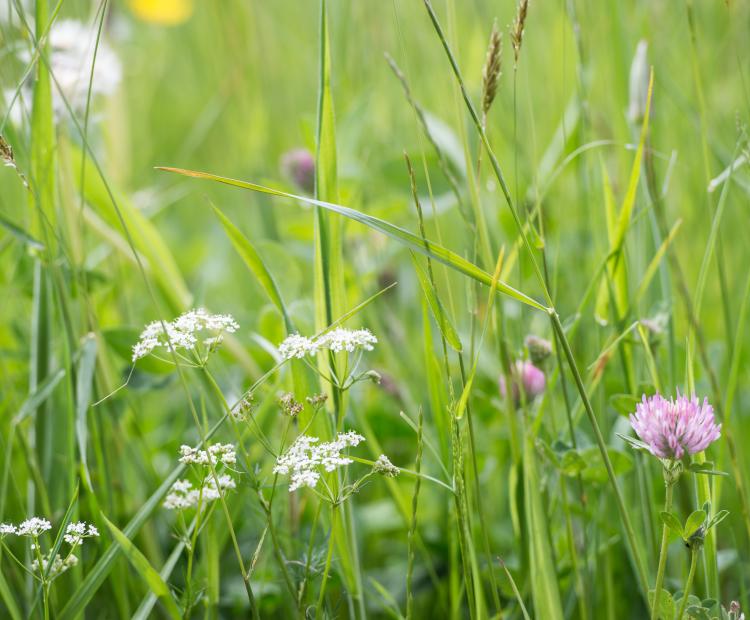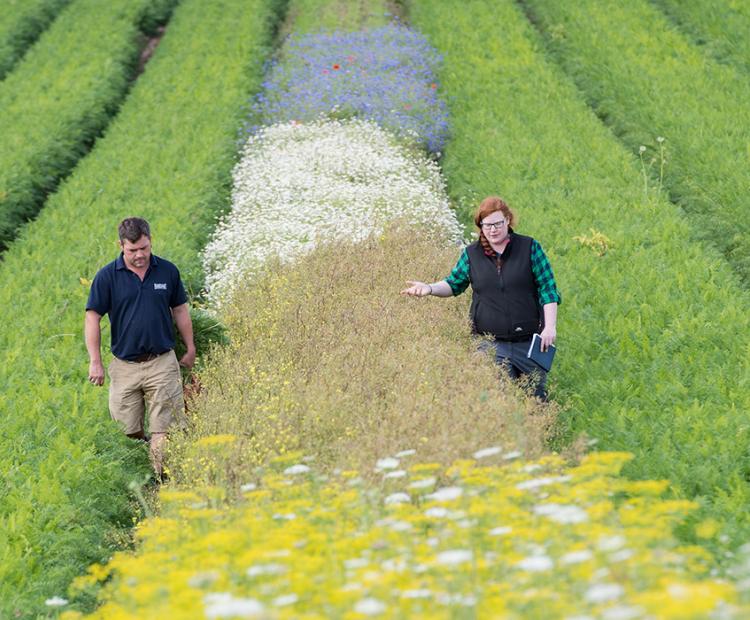
The big picture: using wildflower strips for pest control
They may be beautiful, but these strips prove pretty deadly for every farmer's mortal enemy: aphids
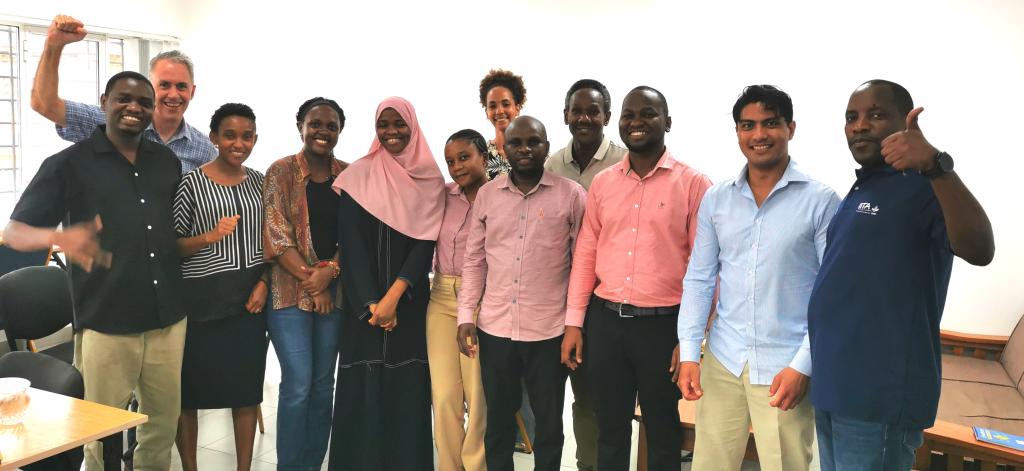
Researchers from an international collaboration tackling cassava brown streak disease (CBSD) have completed a major field visit to the International Institute of Tropical Agriculture (IITA) in Tanzania, helping to test cutting-edge disease detection technology under real farming conditions.
The visit formed part of an NSF-BBSRC Ecology and Evolution of Infectious Diseases project investigating how multispectral imaging (MSI) and disease modelling could improve the management of CBSD, one of the most damaging viral diseases affecting cassava production in East Africa.
Cassava is expected to play an increasingly important role in global food security because of its resilience to climate change. However, CBSD continues to threaten production across sub-Saharan Africa by destroying cassava roots while often leaving few visible symptoms on leaves and stems. Farmers frequently only discover infection when harvesting a failed crop.
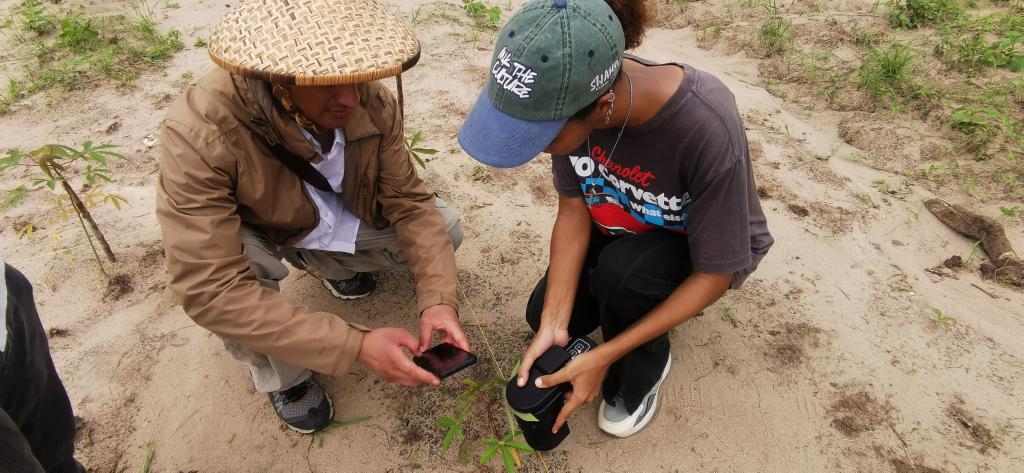
During the visit, researchers from Rothamsted Research and IITA-Tanzania used Manchester University’s newly developed MSI devices. The devices have been calibrated and tested at North Carolina State University, where, under laboratory conditions, they have shown 95% accuracy in detecting CBSD infection just 28 days after infection, before visible symptoms appear. The MSI technology analyses cassava leaves using multiple wavelengths of light, while machine learning models interpret the resulting spectra to identify infected plants.
Navin Patel, who represented Rothamsted Research during the visit, said: “Using the devices directly in the field gave us a much clearer understanding of their practical strengths and challenges, including scan time, usability, environmental conditions, device handling, and how feasible large-scale field scanning would be in practice.”
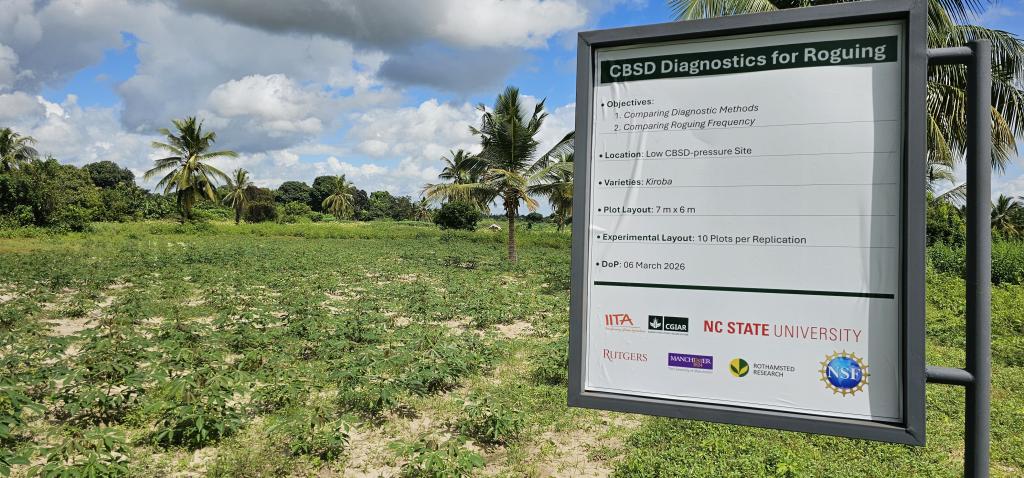
The field trials also provided an important opportunity to connect the modelling work, led by Vasthi Alonso Chávez at Rothamsted Research, with the realities of disease management in agricultural systems. Observing the interaction between disease spread, whitefly populations, roguing practices, cultivar differences and MSI detection in real field experiments helped strengthen understanding beyond simulation-based studies alone.
Alongside the scientific work, the visit also helped raise awareness of the project among a wide range of stakeholders. More than 200 visitors attended presentations at the IITA booth, including researchers, institute staff, seed producers, policymakers and members of the public. Former Tanzanian President Jakaya Kikwete was among those introduced to the project and its potential impact on cassava disease management.
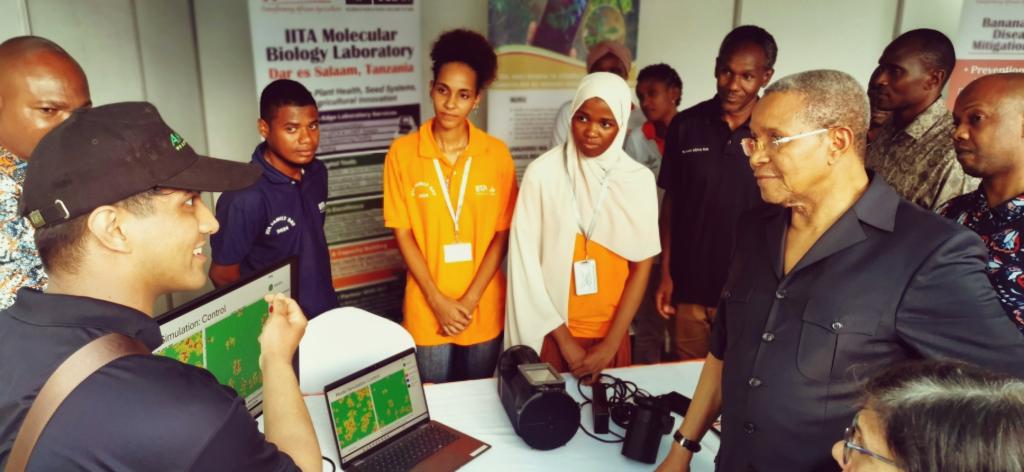
Navin Patel from Rothamsted also delivered a one-hour seminar at IITA attended by more than 40 participants, generating extensive discussion around disease modelling, field detection technologies and future applications for CBSD management.
The visit created new collaborations and highlighted strong interest in integrating modelling approaches into cassava disease management programmes. Feedback from researchers and field practitioners will now help guide the next stage of model development and technology testing.
Beyond cassava, the project team believes the combination of MSI technology and epidemiological modelling could eventually support disease management in other vegetatively propagated crops including potato, sweet potato, taro and yam.
The multinational project is led by Rutgers University in collaboration with Rothamsted Research, North Carolina State University, University of Manchester, and IITA-Tanzania.

Epidemiological Modeller
Rothamsted Research is the longest-running agricultural research institute in the world. We work from gene to field with a proud history of ground-breaking
discoveries in areas as diverse as crop management, statistical interpretation and soil health. Our founders, in 1843, were the pioneers of modern
agriculture, and we are known for our imaginative science and our collaborative approach to developing innovative farm practice.
Through independent research, we make significant contributions to improving agri-food systems in the UK and internationally, with
economic impact estimated to exceed £3 bn in annual contribution to the UK economy. Our strength lies in our systems approach, which combines strategic research,
interdisciplinary teams and multiple partnerships.
Rothamsted is home to three unique National Bioscience Research Infrastructures which are open to researchers from all over the world:
The Long-Term Experiments,
Rothamsted Insect Survey and the
North Wyke Farm Platform.
We are strategically funded by the Biotechnology and Biological Sciences Research Council (BBSRC), with additional support from other national and
international funding streams, and from industry. We are also supported by the Lawes Agricultural Trust (LAT).
The Biotechnology and Biological Sciences Research Council is part of UK Research and Innovation, a non-departmental public body funded by a grant-in-aid
from the UK government.
BBSRC invests to push back the frontiers of biology and deliver a healthy, prosperous and sustainable future. Through our investments, we build and support a vibrant,
dynamic and inclusive community which delivers ground-breaking discoveries and develops bio-based solutions that contribute to tackling global challenges,
such as sustainable food production, climate change, and healthy ageing.
As part of UK Research and Innovation (UKRI), we not only play a pivotal role in fostering connections that enable the UK’s world-class research and innovation system
to flourish – we also have a responsibility to enable the creation of a research culture that is diverse, resilient, and engaged.
BBSRC proudly forges interdisciplinary collaborations where excellent bioscience has a fundamental role. We pioneer approaches that enhance the equality, diversity,
and inclusion of talent by investing in people, infrastructure, technologies, and partnerships on a global scale.
The Lawes Agricultural Trust, established in 1889 by Sir John Bennet Lawes, supports Rothamsted Research’s national and international agricultural science through the provision of land, facilities and funding. LAT, a charitable trust, owns the estates at Harpenden and Broom's Barn, including many of the buildings used by Rothamsted Research. LAT provides an annual research grant to the Director, accommodation for nearly 200 people, and support for fellowships for young scientists from developing countries. LAT also makes capital grants to help modernise facilities at Rothamsted, or invests in new buildings.