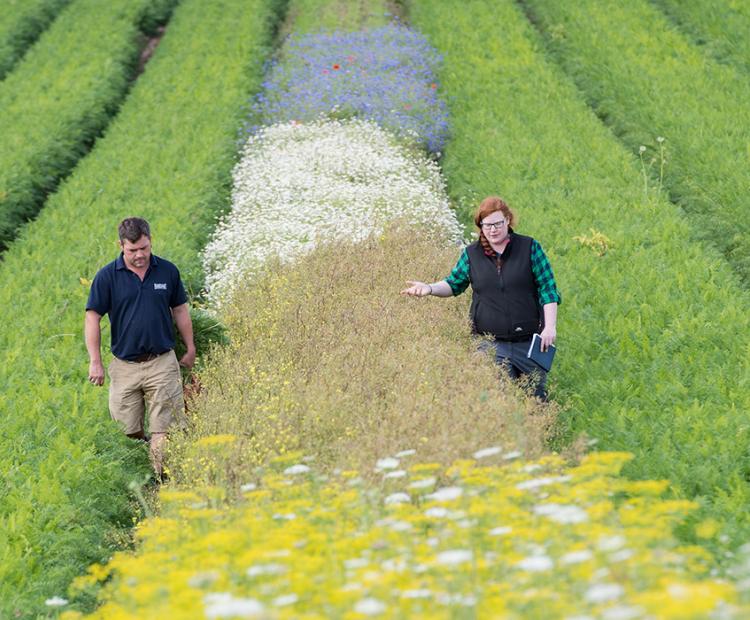
The big picture: using wildflower strips for pest control
They may be beautiful, but these strips prove pretty deadly for every farmer's mortal enemy: aphids
This decision confirms that the wheat meets the criteria of a precision-bred organism under the Genetic Technology (Precision Breeding) Act 2023 and the Genetic Technology (Precision Breeding) Regulations 2025. The decision allows the crop to progress to the next part of the process, which is evaluation by the Foods Standards Agency for food and feed use. The wheat is being studied within the Defra-funded PROBITY project, and approval would enable it to be grown on a small number of selected farms and processed in real-world food manufacturing plants.
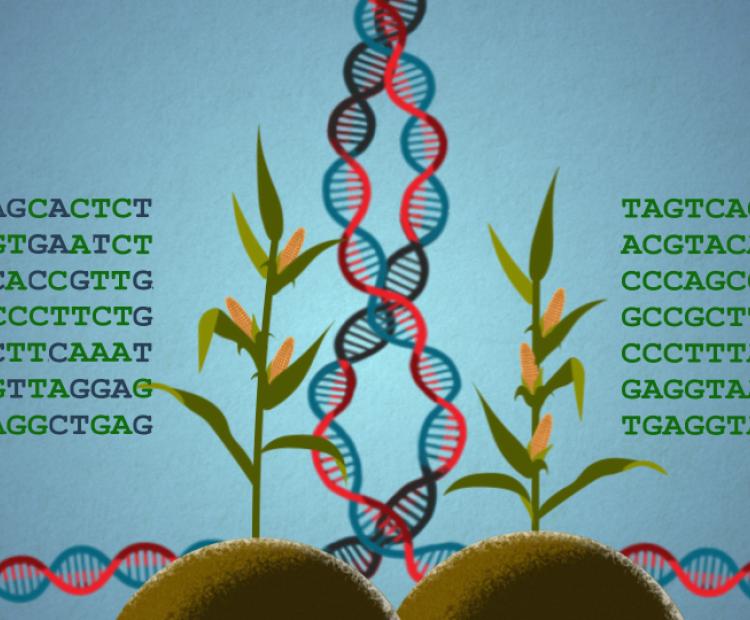
The wheat was developed using CRISPR genome editing to reduce concentrations of free asparagine, a naturally occurring amino acid that converts into acrylamide during baking, frying, roasting and toasting. Acrylamide is toxic and a Group 2a carcinogen (probably cancer-causing in humans).
Researchers targeted the asparagine synthetase-2 (TaASN2) gene, which plays a key role in asparagine production in wheat grain. The precise genetic changes that were introduced reduced free asparagine levels by 59% over two years of field trials, without affecting grain yield.
The development comes at a time of growing regulatory focus on acrylamide. Current EU legislation sets benchmark levels for acrylamide in food products, while new maximum limits are expected from the European Commission this year. These changes are likely to affect the whole wheat supply chain across the EU and its trading partners, including the UK.
PROBITY – A Platform to Rate Organisms Bred for Improved Traits and Yield – is a three-year, £2.2m farmer-led project, funded by Defra’s Farming Innovation Programme Small R&D Partnership Round 3). The multi-partner project aims to bring three precision-bred cereal varieties through the regulatory processes and onto commercial farms for scrutiny by farmers, scientists and food manufacturers. The wheat is the second of these to receive a UK marketing notice – the first being high lipid barley also developed at Rothamsted, by Prof Peter Eastmond.
Professor Nigel Halford, who is technical lead for the project, said:
"Receiving this marketing notice is an important milestone, not only for this wheat but for the UK's new precision breeding framework. It shows how the Precision Breeding Act can enable innovation that delivers tangible public benefits. In this case, we can address a significant food safety challenge in a way that would have been difficult to achieve through conventional breeding alone, while maintaining the performance that farmers need and helping the food industry prepare for a changing regulatory landscape."
By reducing the formation of acrylamide at source, the technology has the potential to reduce the exposure of consumers to this toxic contaminant without comprising food quality or how consumers prepare and enjoy everyday foods.
Tom Allen-Stevens, managing director of the British On-Farm Innovation Network (BOFIN) which leads the PROBITY project said:
"The second precision-bred cereal to receive a UK marketing notice is another step forward for innovation in agriculture. It shows that the regulatory system is working as intended – enabling traits with the potential to deliver genuine benefits to farmers, consumers and the food industry to move from research labs into farmers’ fields.
It's only when these traits are assessed on farms and then scrutinised by our cross industry partners that we can fully understand their value, which is exactly what we need if precision breeding is to fulfil its potential."
Crop Scientist
Rothamsted Research is the longest-running agricultural research institute in the world. We work from gene to field with a proud history of ground-breaking
discoveries in areas as diverse as crop management, statistical interpretation and soil health. Our founders, in 1843, were the pioneers of modern
agriculture, and we are known for our imaginative science and our collaborative approach to developing innovative farm practice.
Through independent research, we make significant contributions to improving agri-food systems in the UK and internationally, with
economic impact estimated to exceed £3 bn in annual contribution to the UK economy. Our strength lies in our systems approach, which combines strategic research,
interdisciplinary teams and multiple partnerships.
Rothamsted is home to three unique National Bioscience Research Infrastructures which are open to researchers from all over the world:
The Long-Term Experiments,
Rothamsted Insect Survey and the
North Wyke Farm Platform.
We are strategically funded by the Biotechnology and Biological Sciences Research Council (BBSRC), with additional support from other national and
international funding streams, and from industry. We are also supported by the Lawes Agricultural Trust (LAT).
The Biotechnology and Biological Sciences Research Council is part of UK Research and Innovation, a non-departmental public body funded by a grant-in-aid
from the UK government.
BBSRC invests to push back the frontiers of biology and deliver a healthy, prosperous and sustainable future. Through our investments, we build and support a vibrant,
dynamic and inclusive community which delivers ground-breaking discoveries and develops bio-based solutions that contribute to tackling global challenges,
such as sustainable food production, climate change, and healthy ageing.
As part of UK Research and Innovation (UKRI), we not only play a pivotal role in fostering connections that enable the UK’s world-class research and innovation system
to flourish – we also have a responsibility to enable the creation of a research culture that is diverse, resilient, and engaged.
BBSRC proudly forges interdisciplinary collaborations where excellent bioscience has a fundamental role. We pioneer approaches that enhance the equality, diversity,
and inclusion of talent by investing in people, infrastructure, technologies, and partnerships on a global scale.
The Lawes Agricultural Trust, established in 1889 by Sir John Bennet Lawes, supports Rothamsted Research’s national and international agricultural science through the provision of land, facilities and funding. LAT, a charitable trust, owns the estates at Harpenden and Broom's Barn, including many of the buildings used by Rothamsted Research. LAT provides an annual research grant to the Director, accommodation for nearly 200 people, and support for fellowships for young scientists from developing countries. LAT also makes capital grants to help modernise facilities at Rothamsted, or invests in new buildings.