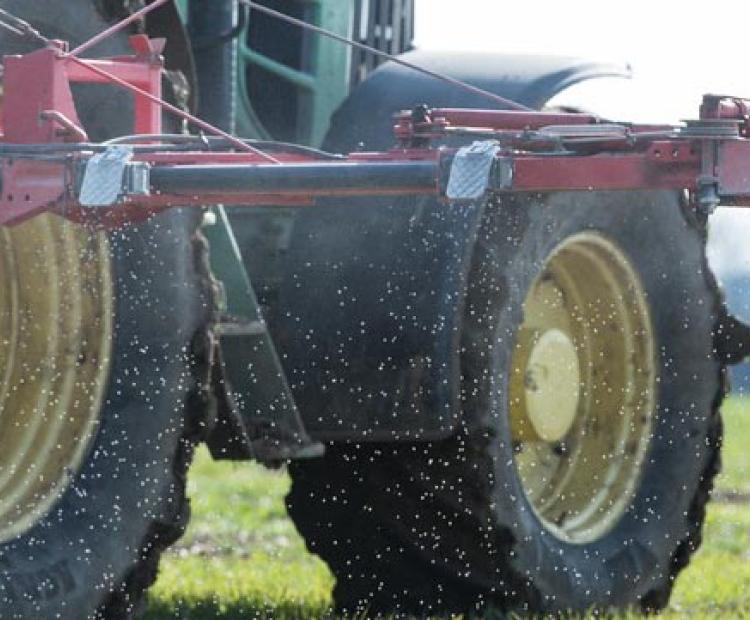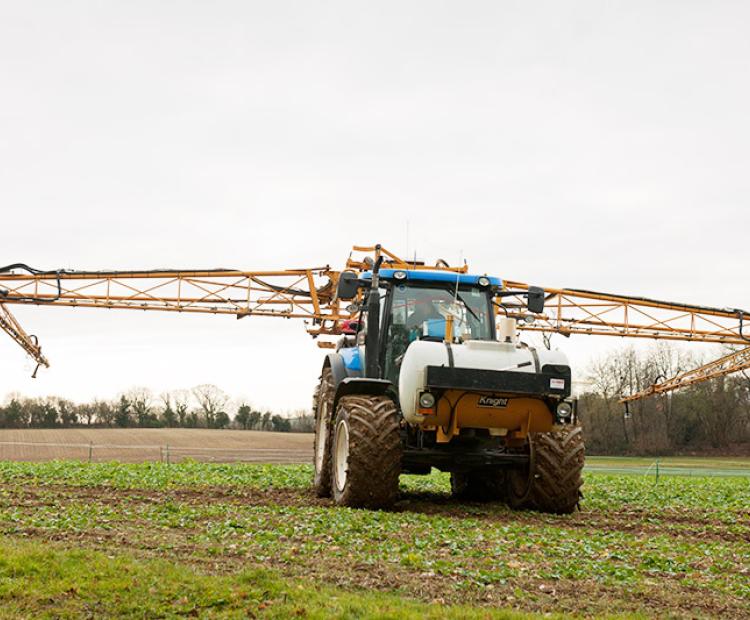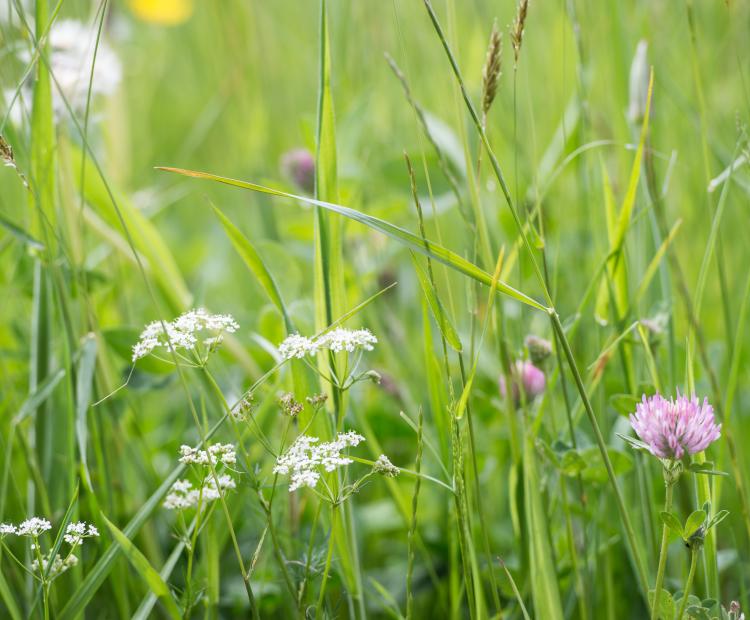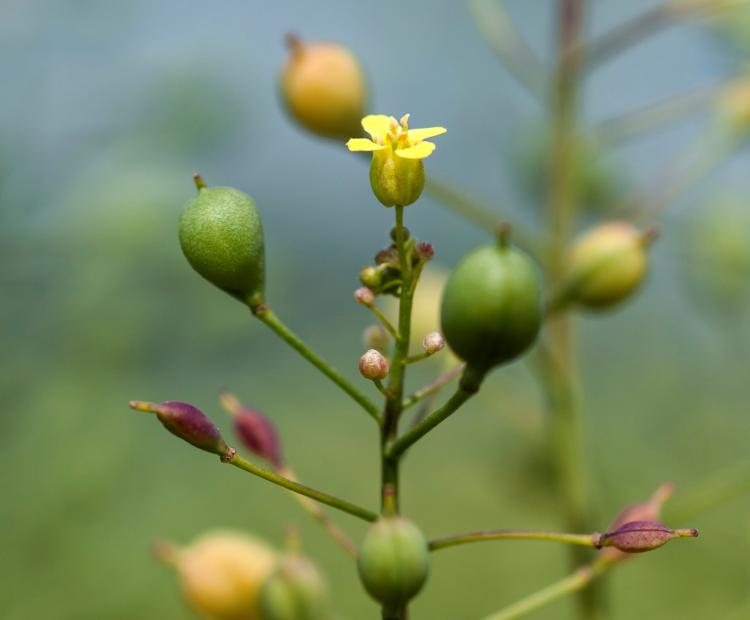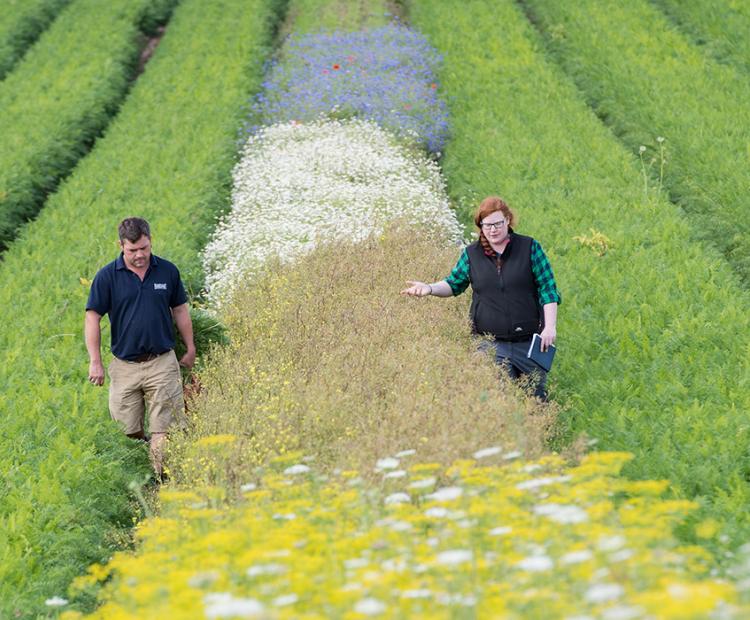
The big picture: using wildflower strips for pest control
They may be beautiful, but these strips prove pretty deadly for every farmer's mortal enemy: aphids
Published in Earth’s Future, the research shows that if the planet warms by around 3°C, average global wheat prices could rise to USD 364 per ton, roughly three times higher than the inflation‑adjusted price in 2010. For farmers, traders, millers, and food manufacturers, the findings highlight a growing climate‑related risk to one of the world’s most important crops.
Wheat covers more land globally than rice or maize, supplies a major share of human calories and protein, and is one of the most widely traded agricultural commodities. Much of the world’s wheat is grown under water‑limited conditions, making it highly sensitive to drought.
The research team, spanning climate science, agronomy, crop modelling, and food‑system economics, set out to answer a critical question: Can drought across global wheat regions explain year‑to‑year changes in global wheat prices?
To uncover this link, scientists developed a new indicator called severe water scarcity (SWS). It captures both short‑term and long‑term water deficits during the four months before harvest, when wheat is most vulnerable to moisture stress. Researchers mapped SWS across global wheat, maize, and rice production areas and compared the affected area with global commodity prices. The clearest relationship emerged for wheat with 74% of annual variation in global wheat prices (2000–2021) could be explained by SWS alone. For maize, SWS explained up to 40% of price variability. For rice, no meaningful relationship was found.
The model was built without using data from 2022–2024, yet it still captured the broad price levels and shifts during these turbulent years, providing a strong real‑world test. Between 2000 and 2020, an average of 5% of global wheat land experienced severe water scarcity each year. In major drought years 2000, 2010, 2012, and 2020 - more than 15% of wheat area was affected. These spikes aligned with notable movements in global wheat markets.
But what about the future? Using simulations from 31 CMIP6 and 27 CMIP5 global climate models, the team explored how warming could change drought patterns and wheat prices. The results show a clear trend:
As warming increases, severe water scarcity becomes more widespread across major wheat belts, amplifying price volatility and raising long‑term average prices.
Dr Mikhail Semenov, co-author of the study from Rothamsted, said, “The study does not claim that drought alone sets wheat prices. Energy costs, fertilizer markets, grain stocks, exchange rates, trade policies, pests, diseases, and geopolitical shocks all play major roles. But the research reveals a climate‑driven signal that has been extremely difficult to quantify until now and shows that large‑scale drought across key production regions can ripple through global wheat markets.”
The research was led by Miroslav Trnka of the Global Change Research Institute of the Czech Academy of Sciences (CzechGlobe) who brought together scientists from research institutions across Europe and the United States.

Mathematical Modeller
Rothamsted Research is the longest-running agricultural research institute in the world. We work from gene to field with a proud history of ground-breaking
discoveries in areas as diverse as crop management, statistical interpretation and soil health. Our founders, in 1843, were the pioneers of modern
agriculture, and we are known for our imaginative science and our collaborative approach to developing innovative farm practice.
Through independent research, we make significant contributions to improving agri-food systems in the UK and internationally, with
economic impact estimated to exceed £3 bn in annual contribution to the UK economy. Our strength lies in our systems approach, which combines strategic research,
interdisciplinary teams and multiple partnerships.
Rothamsted is home to three unique National Bioscience Research Infrastructures which are open to researchers from all over the world:
The Long-Term Experiments,
Rothamsted Insect Survey and the
North Wyke Farm Platform.
We are strategically funded by the Biotechnology and Biological Sciences Research Council (BBSRC), with additional support from other national and
international funding streams, and from industry. We are also supported by the Lawes Agricultural Trust (LAT).
The Biotechnology and Biological Sciences Research Council is part of UK Research and Innovation, a non-departmental public body funded by a grant-in-aid
from the UK government.
BBSRC invests to push back the frontiers of biology and deliver a healthy, prosperous and sustainable future. Through our investments, we build and support a vibrant,
dynamic and inclusive community which delivers ground-breaking discoveries and develops bio-based solutions that contribute to tackling global challenges,
such as sustainable food production, climate change, and healthy ageing.
As part of UK Research and Innovation (UKRI), we not only play a pivotal role in fostering connections that enable the UK’s world-class research and innovation system
to flourish – we also have a responsibility to enable the creation of a research culture that is diverse, resilient, and engaged.
BBSRC proudly forges interdisciplinary collaborations where excellent bioscience has a fundamental role. We pioneer approaches that enhance the equality, diversity,
and inclusion of talent by investing in people, infrastructure, technologies, and partnerships on a global scale.
The Lawes Agricultural Trust, established in 1889 by Sir John Bennet Lawes, supports Rothamsted Research’s national and international agricultural science through the provision of land, facilities and funding. LAT, a charitable trust, owns the estates at Harpenden and Broom's Barn, including many of the buildings used by Rothamsted Research. LAT provides an annual research grant to the Director, accommodation for nearly 200 people, and support for fellowships for young scientists from developing countries. LAT also makes capital grants to help modernise facilities at Rothamsted, or invests in new buildings.