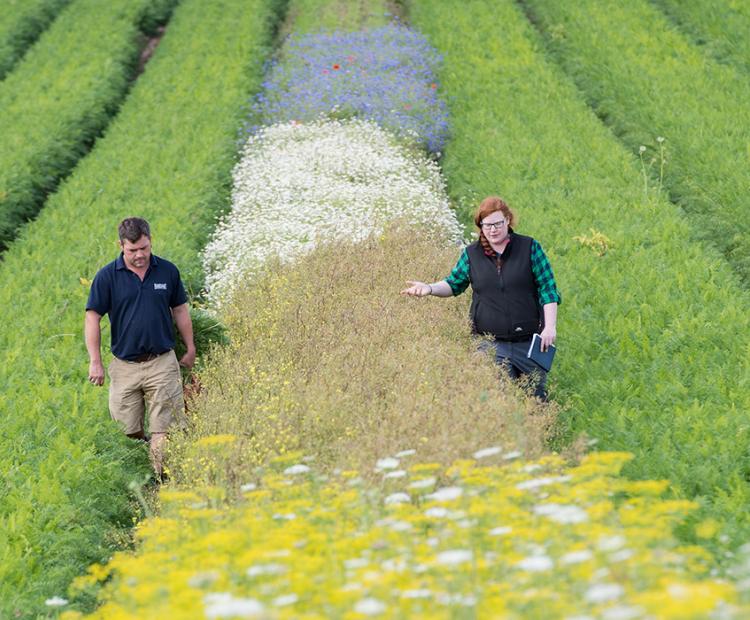
The big picture: using wildflower strips for pest control
They may be beautiful, but these strips prove pretty deadly for every farmer's mortal enemy: aphids

They don't have the fame of butterflies… They don't get the love of bees…. And they're definitely not winning any beauty contests. But this Halloween, we're putting a cast of overlooked insects and spiders into the spotlight.
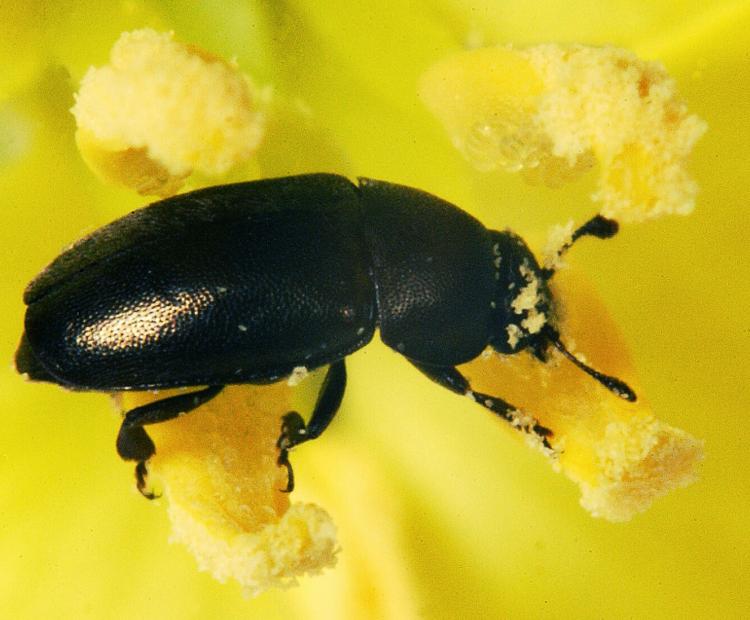
Meet the 'Cinderella species'... spooky spiders, mysterious barkflies, earwigs, beetles, flies and tiny bugs.
They may not look impressive, but they perform some of nature's most important jobs:
• Recycling dead plants and animals
• Pollinating flowers
• Keeping pest populations under control
• Food for birds, bats and other wildlife
As part of the NERC-funded DRUID project (Drivers & Repercussions of UK Insect Declines), a collaboration led by the University of Leeds, Keele University, and involving Rothamsted Research, the University of Reading and UKCEH, our researchers analysed a 30-year archive of insects preserved in ethanol. The specimens were collected daily by 12-m suction traps located across the UK as part of the Rothamsted Insect Survey. This provided new data on more than 600,000 previously unidentified insects and spiders and challenged previous findings that all insects are in decline. They discovered that many of them are not disappearing at all, instead holding steady or even increasing in number. The researchers also found that many species are emerging earlier in the year than they did 30 years ago. The prime suspect appears to be warmer temperatures. As the climate changes, many insects and spiders are getting an earlier start to their season, and those arriving first are often the ones doing best. Changes in land use also mattered, especially the presence of improved grasslands.
Dr Lawrence Bramham, Head of the Rothamsted Insect Survey, said: "The Rothamsted Insect Survey's long-term data and archived insect samples are among the UK's most valuable resources for understanding change in our environment. As well as helping farmers respond to emerging pest threats, these collections allow scientists to look back through time and measure how insect communities have changed over decades. This kind of evidence is essential for understanding the impacts of climate change, habitat change and wider pressures on biodiversity, and for informing future policy and management decisions."
While conservation efforts often focus on more charismatic wildlife, thousands of lesser-known species quietly support the health of our countryside every day. This Halloween, it's time to spare a thought for the real stars of the spooky season: the spiders dangling from hedgerows, the beetles beneath our feet and the tiny flies buzzing unnoticed through the autumn air. After all, every fairy tale has a Cinderella, and Britain's forgotten insects and spiders have earned their invitation to the biodiversity ball.

Spatial Statistician

Head of the Rothamsted Insect Survey
Rothamsted Research is the longest-running agricultural research institute in the world. We work from gene to field with a proud history of ground-breaking
discoveries in areas as diverse as crop management, statistical interpretation and soil health. Our founders, in 1843, were the pioneers of modern
agriculture, and we are known for our imaginative science and our collaborative approach to developing innovative farm practice.
Through independent research, we make significant contributions to improving agri-food systems in the UK and internationally, with
economic impact estimated to exceed £3 bn in annual contribution to the UK economy. Our strength lies in our systems approach, which combines strategic research,
interdisciplinary teams and multiple partnerships.
Rothamsted is home to three unique National Bioscience Research Infrastructures which are open to researchers from all over the world:
The Long-Term Experiments,
Rothamsted Insect Survey and the
North Wyke Farm Platform.
We are strategically funded by the Biotechnology and Biological Sciences Research Council (BBSRC), with additional support from other national and
international funding streams, and from industry. We are also supported by the Lawes Agricultural Trust (LAT).
The Biotechnology and Biological Sciences Research Council is part of UK Research and Innovation, a non-departmental public body funded by a grant-in-aid
from the UK government.
BBSRC invests to push back the frontiers of biology and deliver a healthy, prosperous and sustainable future. Through our investments, we build and support a vibrant,
dynamic and inclusive community which delivers ground-breaking discoveries and develops bio-based solutions that contribute to tackling global challenges,
such as sustainable food production, climate change, and healthy ageing.
As part of UK Research and Innovation (UKRI), we not only play a pivotal role in fostering connections that enable the UK’s world-class research and innovation system
to flourish – we also have a responsibility to enable the creation of a research culture that is diverse, resilient, and engaged.
BBSRC proudly forges interdisciplinary collaborations where excellent bioscience has a fundamental role. We pioneer approaches that enhance the equality, diversity,
and inclusion of talent by investing in people, infrastructure, technologies, and partnerships on a global scale.
The Lawes Agricultural Trust, established in 1889 by Sir John Bennet Lawes, supports Rothamsted Research’s national and international agricultural science through the provision of land, facilities and funding. LAT, a charitable trust, owns the estates at Harpenden and Broom's Barn, including many of the buildings used by Rothamsted Research. LAT provides an annual research grant to the Director, accommodation for nearly 200 people, and support for fellowships for young scientists from developing countries. LAT also makes capital grants to help modernise facilities at Rothamsted, or invests in new buildings.